
Key Takeaways
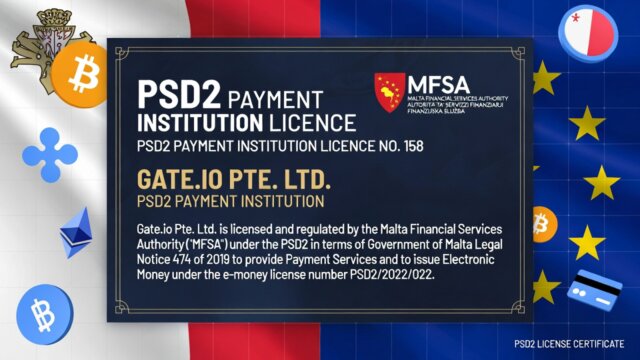
- Gate.io secured a Payment Institution license in Malta under PSD2 rules in 2026.
- The license enables regulated fiat services across the European Union.
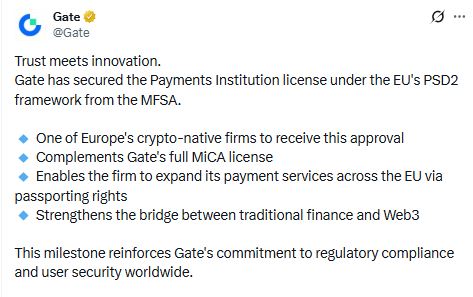
- The approval strengthens the exchange’s compliance strategy alongside MiCA authorization.
- EU users may gain faster euro deposits, withdrawals, and stablecoin settlement options.
- The crypto exchange PSD2 license Europe 2026 milestone improves trust and institutional appeal.
European crypto regulation continues to mature in 2026. Exchanges now compete not only on liquidity but also on compliance strength. The Gate.io Malta PSD2 license EU approval marks a decisive step in that direction.
Gate obtained the license through its Malta-based entity. The authorization falls under the EU’s Second Payment Services Directive framework. Malta’s regulator granted the approval after reviewing operational, capital, and compliance standards.
This milestone allows Gate to expand beyond crypto trading. It now enters regulated fiat payment infrastructure across the bloc. As a result, EU users may soon experience smoother euro transactions tied directly to their exchange accounts.
The license enables broader fiat and stablecoin payment services in Europe. That development positions Gate among exchanges that actively integrate traditional financial rails.
The move also aligns with Europe’s stricter digital asset environment in 2026. Regulators demand transparency, segregation of funds, and operational resilience. Gate’s approval signals readiness to operate within that structure.
What the Crypto Exchange PSD2 License Europe 2026 Means for Users
The crypto exchange PSD2 license Europe 2026 status allows Gate to provide regulated payment services across EU member states. Passporting rights enable operations in multiple countries without separate approvals.
Therefore, the exchange can legally process credit transfers, execute payment transactions, and support regulated fiat flows. This shift matters because many exchanges still rely on fragmented banking partnerships.
With this approval, Gate gains stronger control over its payment stack. Instead of depending solely on third-party intermediaries, it can integrate compliant euro rails directly into its ecosystem.
For retail users, this may translate into faster euro deposits and withdrawals. Moreover, transaction transparency should improve because PSD2 requires clear reporting standards.
Institutional clients may benefit even more. Regulated fiat gateways reduce counterparty risk and simplify treasury management. Consequently, funds can move between bank accounts and exchange wallets with fewer operational bottlenecks.
The Gate.io fiat payment services European Union expansion also supports stablecoin growth. Users often convert euros into stablecoins for trading or settlement. A licensed payment layer improves that conversion process.
Furthermore, PSD2 frameworks require strict anti-money laundering controls. Gate must maintain compliance checks, internal audits, and reporting standards. Those safeguards enhance user confidence across the region.
Importantly, this development complements MiCA authorization already in place. MiCA governs crypto asset services, while PSD2 governs payment activities. Together, they create a comprehensive regulatory foundation.
Passporting Power and Competitive Positioning
Passporting stands at the center of this strategy. Once Malta approved the license, Gate gained access to broader EU markets under harmonized rules.
The Malta Financial Services Authority oversees compliance at the national level. However, EU law allows licensed institutions to operate across member states.
As a result, Gate can scale services without reopening regulatory negotiations in each country. This efficiency reduces friction and accelerates expansion timelines.
Competition in Europe has intensified during 2026. Exchanges now race to secure regulatory clarity before onboarding new users. A PSD2 license provides a clear competitive advantage.
Many platforms still depend on limited banking corridors. In contrast, licensed payment institutions operate within a defined supervisory structure. That difference influences institutional trust and partnership opportunities.
Moreover, regulated status supports deeper integration with European fintech networks. Payment providers prefer partners that meet PSD2 requirements. Therefore, Gate may unlock new collaboration channels.
This positioning also improves resilience. If one banking partner exits, the exchange retains regulatory authorization to establish alternatives. Such flexibility matters in volatile compliance environments.
From a strategic perspective, the Gate.io Malta PSD2 license EU milestone strengthens long-term sustainability. It demonstrates commitment to European oversight rather than regulatory arbitrage.
Strategic Expansion of Gate.io Fiat Payment Services European Union
Gate.io fiat payment services European Union development could reshape user experience during 2026. The exchange may introduce direct debit functionality, structured euro accounts, or instant payout features.
Although product timelines remain unconfirmed, infrastructure now exists to support those offerings. PSD2 standards allow payment initiation services and regulated transaction processing.
Retail traders often face delays when withdrawing euros. Licensed payment rails can shorten settlement windows. Faster processing enhances liquidity management for active participants.
Institutional desks also require predictable fiat channels. They must reconcile large transfers efficiently and maintain audit trails. A regulated framework simplifies those requirements.
Additionally, stablecoin issuers and liquidity providers seek compliant on-ramps. A PSD2-backed institution offers a structured pathway for euro-to-stablecoin conversion.
Security standards also improve under this model. Payment institutions must maintain safeguarding measures for client funds. They must also separate operational capital from customer balances.
Consequently, users gain stronger protection compared to loosely structured arrangements. Compliance obligations increase operational costs, yet they reinforce systemic trust.
The broader European market now favors regulated actors. Policymakers continue tightening oversight of digital asset services. Exchanges that invest in compliance infrastructure position themselves for sustainable growth.
The Gate.io Malta PSD2 license EU achievement therefore reflects a strategic pivot. Rather than operating at the margins of finance, the platform integrates directly into European payment architecture.
Read Also: Why Crypto Market Is Falling Today – Short-Term Dip or Long Fall?
Disclaimer!! CryptopianNews provides this information for educational and informational purposes only. You should not consider it financial or investment advice. Cryptocurrency markets are highly volatile and speculative, and they carry inherent risks. We advise readers to conduct their own research and to consult with a qualified financial advisor before making any investment decisions.

- Gate.io Gets Malta PSD2 License: What It Means for EU Crypto Users - February 27, 2026
- Inside the $61M Tether DOJ Investigation Recovery Case - February 26, 2026
- Why Crypto Market Is Falling Today – Short-Term Dip or Long Fall? - February 24, 2026