
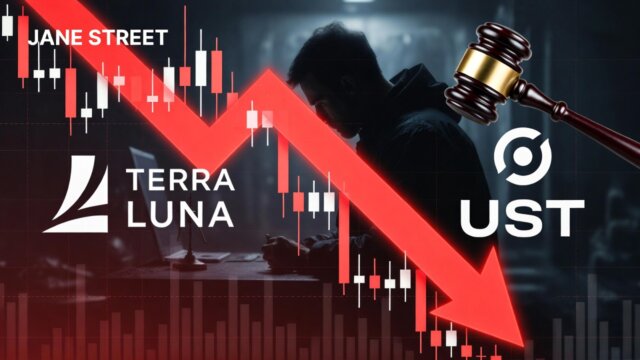
Important Points:
- The Terra Luna collapse 2022 lawsuit followed a $40 billion market wipeout in May 2022.
- Plaintiffs allege Jane Street insider trading crypto activity before public panic intensified.
- The case centers on access to nonpublic risk data and strategic token liquidation timing.
- Regulators now view the dispute as a test for crypto market integrity standards.
- Institutional trading practices in digital assets face stricter scrutiny as litigation advances.
The Terra Collapse and the Roots of Litigation
In May 2022, the crypto market witnessed one of its most dramatic failures when the algorithmic stablecoin ecosystem operated by Terraform Labs unraveled within days. Its flagship stablecoin lost its dollar peg, while its companion token plunged toward near-zero valuations. As a result, approximately $40 billion in market capitalization evaporated, shaking investor confidence worldwide.
Initially, many investors believed arbitrage incentives would restore stability. However, sustained redemption pressure overwhelmed the system’s design. Consequently, liquidity thinned, exchanges halted trading pairs, and panic accelerated across centralized and decentralized platforms. The collapse did not occur in isolation. Instead, it triggered cascading liquidations across hedge funds, lenders, and trading desks exposed to the ecosystem.
Soon after, the Terra Luna collapse 2022 lawsuit emerged, consolidating investor complaints into structured legal action. Plaintiffs alleged misleading risk disclosures and structural fragility within the protocol. Moreover, they argued that certain sophisticated market participants exited positions before the broader public recognized the severity of the depegging spiral. These allegations laid the groundwork for deeper scrutiny into trading conduct surrounding the meltdown.
Allegations of Jane Street Insider Trading Crypto Activity
As the litigation evolved, attention shifted toward institutional liquidity providers, including Jane Street, a firm active in digital asset markets. Court filings referenced transaction timing and communication records that plaintiffs claim indicate informational advantages. Specifically, they argue that trades executed before the stablecoin’s full collapse reflected awareness of internal risk signals.
The phrase Jane Street insider trading crypto has since circulated widely in legal commentary. Plaintiffs contend that certain transactions occurred after exposure to nonpublic updates regarding liquidity stress and redemption flows. Therefore, they assert that those trades constituted unfair advantages over retail participants lacking equivalent insight.
Defense counsel, however, disputes these claims. They argue that blockchain markets operate transparently by default, since transaction flows are publicly recorded on-chain. Furthermore, they maintain that the firm’s strategies represented ordinary hedging practices amid volatility rather than exploitation of confidential data. According to their position, sophisticated firms routinely rebalance exposure when volatility spikes.
Nevertheless, timing remains central to the dispute. Plaintiffs highlight sequences in which large positions were reduced shortly before the broader market recognized systemic breakdown. Because of that sequencing, the lawsuit frames the issue as a test case for how insider trading doctrines translate into decentralized finance environments.

Regulatory Implications and Market Structure Reforms
The Jane Street lawsuit Terra now stands as more than a private civil dispute. Regulators in the United States and abroad view it as a reference point for shaping oversight in digital asset markets. Although crypto operates outside traditional exchanges in many contexts, policymakers increasingly apply securities-style principles to trading behavior.
Consequently, agencies are examining how material nonpublic information should be defined in token ecosystems. Unlike equities markets, blockchain networks combine open ledger transparency with private governance channels. Therefore, determining whether internal communications qualify as insider information requires nuanced interpretation.
At the same time, institutional participants are revisiting compliance frameworks. Many firms now implement stricter information barriers, enhanced documentation of risk meetings, and timestamped trade justifications. These measures aim to reduce litigation exposure while reinforcing market confidence. Additionally, exchanges are expanding disclosure dashboards to provide real-time visibility into liquidity conditions.
Importantly, the outcome of the Terra Luna collapse 2022 lawsuit may influence future enforcement priorities. If courts determine that digital asset markets fall within established insider trading doctrines, firms will face expanded fiduciary expectations. Conversely, a narrower interpretation could preserve greater operational flexibility for proprietary trading desks.
Meanwhile, investors remain attentive to developments in the Jane Street insider trading crypto allegations. Because institutional liquidity shapes pricing dynamics, any shift in compliance standards could alter volatility patterns and capital flows. Therefore, market participants closely monitor court proceedings, regulatory statements, and settlement negotiations.
Ultimately, the litigation underscores a broader structural tension within crypto markets. On one hand, decentralization promises openness and equal access. On the other hand, professional trading firms leverage advanced analytics and institutional relationships. As a result, the Jane Street lawsuit Terra captures the friction between innovation and accountability in modern financial infrastructure.
Read also: Crypto Backed Mortgage Program Launched by US lender Rate
Disclaimer!! CryptopianNews provides this information for educational and informational purposes only. You should not consider it financial or investment advice. Cryptocurrency markets are highly volatile and speculative, and they carry inherent risks. We advise readers to conduct their own research and to consult with a qualified financial advisor before making any investment decisions.

- QuFi Post-Quantum Verification Platform: A New Infrastructure Layer for Digital Assets — A Post-Quantum Verification Platform for Digital Assets - September 4, 2026
- Polygon Leads as Visa Expands Stablecoin Network for Cross-Border Payments - April 29, 2026
- Michael Saylor Quantum Computing Bitcoin Threat: Is Bitcoin Ready? - April 24, 2026