

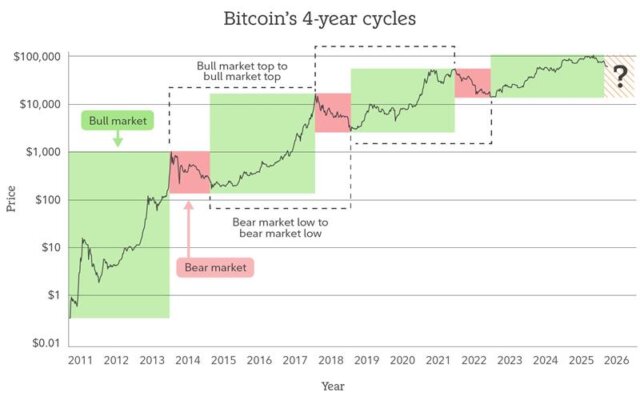
- Around 40% of Bitcoin holders are currently below their cost basis, but that alone does not confirm a new bear market.
- Institutional adoption, spot ETF demand, and stronger market infrastructure make today’s environment different from 2022.
- Weak spot volume, ETF outflows, and macroeconomic uncertainty continue to pressure prices.
- Historical data shows that large numbers of underwater investors often appear near accumulation phases rather than market tops.
- The coming weeks around major support levels could determine whether Bitcoin resumes its long-term uptrend or enters a deeper correction.
The cryptocurrency market is once again facing a wave of uncertainty. Headlines highlighting that nearly 40% of bitcoin holders are in the red have sparked concerns across the investment community. For many market participants, this statistic brings back memories of the devastating bear market of 2022, when multiple industry failures triggered widespread panic and forced selling.
However, numbers rarely tell the complete story on their own. Context is critical when evaluating on-chain metrics and investor sentiment. Throughout Bitcoin’s history, corrections have frequently pushed a significant percentage of holders below their purchase prices. These periods often felt uncomfortable in the moment, yet many later proved to be important accumulation opportunities. The bigger question is not whether investors are underwater. Instead, the focus should be on whether the market is experiencing a temporary cyclical slowdown or the early stages of a prolonged bearish trend. Understanding the difference requires examining institutional demand, market structure, liquidity conditions, and historical behavior.
Why 40% of Bitcoin Holders Being Underwater Is Not Unusual
Market corrections are a normal part of every Bitcoin cycle. During periods of rapid growth, investors often enter the market at elevated prices. When momentum slows, many of those participants temporarily fall below their cost basis. This process has occurred repeatedly throughout Bitcoin’s history. For that reason, the percentage of underwater investors should never be viewed in isolation. A large number of bitcoin holders being at a loss does not automatically indicate that a market collapse is underway. Instead, it often reflects a cooling period after an extended rally.
Historical data suggests that fear usually peaks during corrections rather than at market tops. Investors become increasingly pessimistic as prices decline, even though these phases can create favorable long-term entry opportunities. Consequently, sentiment often becomes disconnected from the broader structural outlook. Another important factor is investor behavior. Long-term holders frequently remain inactive during downturns, demonstrating confidence despite temporary losses. This pattern has historically helped establish support zones that eventually become foundations for future recoveries.
How Today’s Market Differs From the 2022 Bear Market
Comparisons with 2022 are understandable, but the overall market environment has changed significantly. The previous bear market was fueled by a series of systemic failures that damaged confidence across the entire digital asset ecosystem. The collapse of major entities such as the Terraform Labs ecosystem, Celsius Network, Three Arrows Capital, and FTX created widespread contagion. Investors faced uncertainty about counterparty risk, solvency, and the stability of major industry participants.
Today’s situation appears different. Institutional participation has expanded considerably, bringing larger pools of capital into the market. Spot Bitcoin ETFs have also introduced a new source of demand that did not exist in previous cycles. Additionally, the mining industry has matured, with stronger operational structures and greater resilience than in earlier years. While prices remain under pressure, there is currently no obvious industry-wide insolvency event threatening the entire ecosystem. As a result, many analysts view the current weakness as a cyclical transition rather than a repeat of the structural breakdown experienced in 2022.
Warning Signs Investors Should Not Ignore
Although the market structure looks stronger than it did several years ago, risks remain significant. Investors should avoid assuming that every correction will automatically lead to new highs. One concern is Bitcoin’s position relative to important technical indicators. The asset continues to trade below several key moving averages, signaling that bullish momentum has weakened. Until these levels are reclaimed, downside volatility remains a possibility.
At the same time, macroeconomic conditions continue to create uncertainty. Inflation concerns, changing interest-rate expectations, and tightening liquidity conditions have reduced risk appetite across financial markets. These factors affect not only cryptocurrencies but also stocks and other growth-oriented assets. Another notable issue is declining demand momentum. Whale accumulation has slowed considerably, and spot volume growth remains weak. If large buyers remain inactive, the market may struggle to generate the sustained demand necessary for a strong upward breakout. Therefore, investors should closely monitor volume trends alongside price action.
The Role of ETF Flows and Institutional Demand
One of the most important developments in recent years has been the growing influence of institutional investors. Their participation has introduced new dynamics that can significantly affect market direction. Spot Bitcoin ETFs have become a major source of capital inflows and outflows. During periods of strong demand, ETF purchases can absorb available supply and support price appreciation. Conversely, persistent outflows can create additional selling pressure and contribute to market weakness.
Recent concerns surrounding ETF withdrawals have attracted considerable attention. Combined with increased allocations to money market funds and cautious investor positioning, these trends suggest that many participants are adopting a more defensive stance. As a result, risk assets have faced greater resistance. Nevertheless, institutional integration remains a powerful structural advantage. Unlike previous cycles, today’s market includes pension funds, asset managers, corporate treasuries, and regulated investment vehicles. This broader participation base may help reduce the likelihood of a complete market breakdown, even if consolidation continues for an extended period.
What Comes Next for Bitcoin Holders?
The coming weeks may prove decisive for market direction. Technical support levels, investor sentiment, and demand indicators will likely determine whether Bitcoin resumes its broader uptrend or enters a deeper corrective phase. One key metric is the Short-Term Holder cost basis. Historically, reclaiming and maintaining levels above this benchmark has often signaled improving market strength. If buyers can successfully defend critical support zones while volume expands, confidence may gradually return. On the other hand, continued weakness in demand could extend the consolidation period. Many analysts describe the current environment as one of demand exhaustion rather than systemic collapse. In this scenario, prices may remain volatile while the market searches for a sustainable equilibrium.
For long-term bitcoin holders, patience may be more important than prediction. Market cycles rarely move in straight lines, and periods of uncertainty often test investor conviction. Those who focus on fundamentals rather than short-term headlines may be better positioned to navigate the current environment. In addition, structural developments expected in 2026—including expanded regulatory clarity, broader institutional integration, and state-level strategic reserve initiatives—could provide stronger long-term foundations for the asset class. These factors may not eliminate volatility, but they could help create a more resilient market than the one seen during previous downturns.
Conclusion: Is This a New Bear Market or a Normal Correction?
The fact that 40% of bitcoin holders are underwater may sound alarming at first glance, but the statistic requires context. Similar conditions have appeared during past market corrections and have often coincided with accumulation phases rather than final capitulation events. Current risks remain real. Weak spot demand, ETF outflows, macroeconomic uncertainty, and technical weakness continue to weigh on market sentiment. However, the absence of widespread industry contagion and the presence of stronger institutional support distinguish today’s environment from the conditions that fueled the 2022 collapse. For now, caution remains appropriate. Yet the available evidence does not conclusively support the argument that a full-scale bear market has returned. Investors should watch support levels, demand indicators, and ETF flows closely. Ultimately, the behavior of bitcoin holders and institutional participants over the next several weeks may provide the clearest signal about where the market is headed next.
Disclaimer: CryptopianNews shares this for learning and info only. It’s not meant to be financial or investment advice. Crypto markets change a lot and move quickly. Investing in them can be risky. You should always look into things yourself. Talk to a trained financial advisor before making any choices about investing.
