

For over a decade, many Bitcoin investors have tied market peaks and crashes to halving events. Every four years, the reward for miners gets cut in half, supposedly kicking off a new bull run. It’s an idea that has shaped expectations and strategies across the crypto community.
But times have changed. Analysts now argue that halvings aren’t the real force behind Bitcoin’s rise and fall. Instead, today’s Bitcoin market cycles not driven by halvings are shaped by adoption, liquidity, institutional inflows, and broader macroeconomic forces. With ETFs pulling billions and global financial trends weighing heavily on risk assets, it’s becoming clear that supply cuts alone don’t explain Bitcoin’s current behavior.
Let’s explore why the old four-year narrative is fading, what analysts are seeing in Bitcoin adoption cycles analysis, and how Bitcoin market structure trends are reshaping the way we think about the future.
Rethinking the Halving Theory
For years, halvings looked like clockwork triggers for rallies. The 2013, 2017, and 2021 peaks all came within a year of reward reductions. That pattern convinced many traders that halvings were Bitcoin’s heartbeat.
However, analyst James Check from Glassnode sees things differently. In his recent breakdown, he explained that the real turning points happened at moments of adoption and structural change—not just after halving events. He points to the 2017 top and the 2022 bottom as examples of shifts that were less about mining rewards and more about market maturity.
Even Bitwise CIO Matt Hougan echoed this sentiment, noting that the “four-year cycle” narrative is likely over, even if positive returns still show up in 2026.
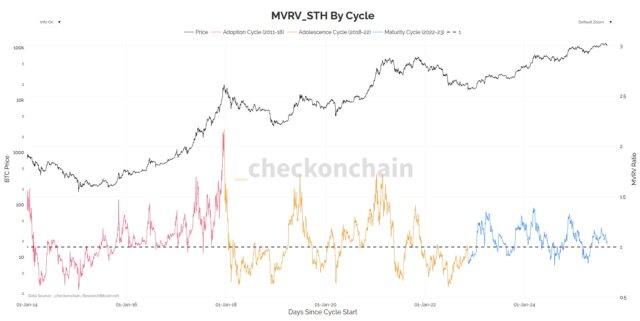
The Three Adoption-Based Cycles
James Check’s framework is a more human, behavior-driven way to look at Bitcoin’s history. He identifies three distinct cycles:
- Adoption Cycle (2011–2018): This was the era of early believers, retail excitement, and explosive growth as Bitcoin first gained global attention.
- Adolescence Cycle (2018–2022): A more chaotic stage filled with speculation, leverage, and a “Wild West” feel across exchanges and new projects.
- Maturity Cycle (2022–today): A stage defined by stability, institutional involvement, and Bitcoin’s deeper integration with the broader financial system.
This framing shows how Bitcoin has evolved far beyond a halving-driven market. Each stage reflects who is participating, how they are investing, and what structures support that growth.
Macro Trends Take the Driver’s Seat
Liquidity, ETFs, and Debt
Today, analysts argue that macro forces are far more influential than halvings. Liquidity in the global financial system, ETF inflows, and debt refinancing trends are steering Bitcoin’s direction more than supply cuts ever did. For example, the approval of spot Bitcoin ETFs in the U.S. has brought a steady wave of institutional flows that don’t care about mining reward schedules.
Looking ahead, the looming $33 trillion in global debt refinancing by 2026 could push investors toward alternative assets. In that scenario, Bitcoin’s role as a hedge or risk asset could be shaped more by macro pressure than by the halving clock.
Predictions of an Extended Bull Market
Some analysts are even more optimistic. Bernstein recently predicted that the current bull run could stretch into 2027, breaking completely from the old four-year rhythm. The reasoning is straightforward: Bitcoin now behaves like a maturing asset class, sensitive to interest rates, regulatory clarity, and institutional demand rather than simple supply changes.
The Halving Myth Still Echoes
To be fair, halvings aren’t irrelevant. On-chain metrics still show echoes of the four-year rhythm. Glassnode data highlights how long-term holders take profits and cycle patterns still emerge. Some analysts believe we could see a peak around October 2025, which would line up with past cycles.
This is where psychology plays a role. Investors expect halvings to matter, so their actions sometimes reinforce that narrative. But expectations are not the same as fundamentals, and over time, market forces beyond halvings are clearly taking over.
Final Thoughts
The story of Bitcoin is no longer a simple one. While halvings once defined its rhythm, today’s Bitcoin market cycles not driven by halvings are unfolding against a much larger backdrop. Adoption, global liquidity, and institutional flows now carry more weight than mining supply shocks.
For investors, the takeaway is clear: focus less on the countdown to the next halving and more on the health of adoption, macroeconomic shifts, and evolving Bitcoin market structure trends. In this new maturity cycle, those forces—not the halving calendar—will shape Bitcoin’s long-term path.
Read Also: Bitcoin as Digital Gold: Larry Fink’s Bold Claim
Disclaimer!! The information provided by CryptopianNews is for educational and informational purposes only. It should not be considered financial or investment advice. Cryptocurrency markets are highly volatile and speculative, and investing in them carries inherent risks. Readers are advised to conduct their own research and consult with a qualified financial advisor before making any investment decisions.

- Binance Buys $100M Bitcoin: SAFU Fund Conversion Explained 2026 - February 2, 2026
- Why Stablecoins Are a Growing Threat to Traditional Bank Deposits - January 28, 2026
- Rich Dad Poor Dad Author’s Bitcoin Loss: Capital Rotation Strategy Gone Wrong - January 25, 2026