
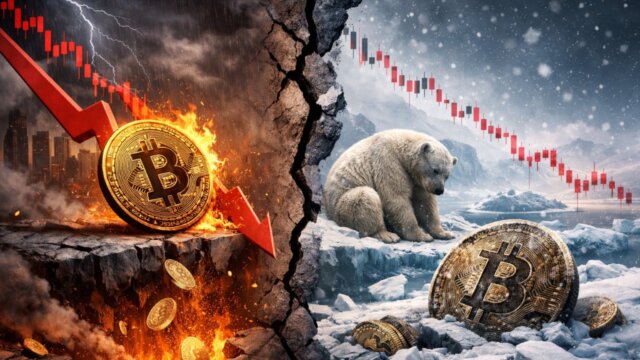
- K33 analysis indicates Bitcoin’s recent crash resembles the final stage of the 2022 bear market.
- Vetle Lunde warns that while the worst may be over, a slow consolidation phase is expected rather than a quick rebound.
- Current Bitcoin trading is between $65,000 and $70,000; the market structure reflects past patterns of stabilization after sharp declines.
- Trading activity has significantly slowed, with a 59% drop in spot trading volume indicating drained speculative energy.
The latest k33 bitcoin analysis is sending a clear and cautious message to investors: Bitcoin’s recent crash looks strikingly similar to the final stage of the brutal 2022 bear market. For seasoned crypto traders, that comparison carries weight. The end of 2022 marked the period when the market finally carved out a bottom after months of relentless selling pressure. Now, according to K33’s research team, history might be rhyming once again. Vetle Lunde, head of research at K33, has laid out a detailed warning. While the worst of the sell-off may already be behind us, investors hoping for a swift and explosive rebound could be disappointed. Instead, the current environment suggests a slow, grinding consolidation phase—much like the one that followed Bitcoin’s collapse in late 2022. This k33 bitcoin analysis does not forecast immediate fireworks. Rather, it paints a picture of patience, cooling speculation, and a market that needs time to rebuild confidence.
A Familiar Pattern Emerging
To understand why this moment feels so familiar, it helps to revisit late September and mid-November 2022. Those months marked the painful conclusion of the previous bear cycle. Bitcoin had already fallen roughly 70% from its 2021 all-time high and was trading in a tight range between $15,000 and $20,000. Back then, traders were exhausted. Confidence had evaporated. Prices drifted sideways for months before any meaningful recovery began. The bounce did not happen overnight. It took time for the market to stabilize, clear excess leverage, and allow long-term investors to quietly accumulate. Fast forward to today, and Bitcoin now trades between $65,000 and $70,000 following a sharp correction earlier in the month. The numbers are different, but the structure feels eerily similar. The current k33 bitcoin analysis suggests that the market could be near another cyclical low—but not necessarily on the verge of a rapid breakout. The similarities are not just based on price action. They extend into derivatives markets, ETF flows, and broader trading behavior.
The Slow Phase: Cooling After the Storm
One of the strongest signals highlighted in the k33 bitcoin analysis is the dramatic slowdown in trading activity. After heavy sell-offs, markets often enter a “cooling period.” That appears to be happening now. Spot trading volume has dropped 59% compared to the previous week. That kind of sharp decline signals that speculative energy has largely drained from the system. Traders who were aggressively chasing price swings are stepping back. Meanwhile, open interest in perpetual futures has fallen to a four-month low. Funding rates across major exchanges remain negative, indicating weak demand from leveraged long traders. In simple terms, fewer participants are willing to bet aggressively on short-term upside. Lunde explains that this behavior typically follows intense liquidation events. When traders face heavy losses, they reduce risk. Positions are trimmed. Leverage is unwound. The market slows down while participants reassess. This cooling-off phase often feels boring. But historically, it has also been a necessary step before the next major cycle begins.
ETF Flows Reflect Caution, Not Panic
Another critical component of the k33 bitcoin analysis involves U.S.-listed Bitcoin ETFs. Since early October, these funds have reduced their exposure by 103,113 BTC from peak levels. On the surface, that number may sound alarming. However, the broader context tells a more nuanced story. More than 90% of peak ETF exposure still remains when measured in Bitcoin terms. That suggests institutional investors have trimmed positions—but have not exited the market en masse. This behavior aligns with a consolidation narrative rather than a full-blown capitulation. Funds appear to be managing risk, not abandoning their long-term conviction. Institutional positioning often provides insight into broader sentiment. If ETFs were liquidating aggressively, the implications would be more severe. Instead, the gradual reduction supports the idea of a cautious reset.
Sentiment Hits Extreme Fear
Perhaps the most striking signal comes from investor psychology. The Crypto Fear and Greed Index recently plunged to a record low of 5, remaining below 10 for most of the week. Such readings reflect extreme fear. Historically, moments of deep pessimism have often coincided with important bottoms. In 2022, sentiment reached similarly depressed levels before Bitcoin eventually stabilized. The current k33 bitcoin analysis emphasizes that fear alone does not guarantee an immediate rebound. But it does indicate that speculative optimism has been thoroughly flushed from the market. When everyone expects further downside, markets sometimes surprise to the upside—but usually only after an extended period of sideways movement.
A Long-Term Value Zone?
So what does this mean for Bitcoin’s future? Lunde believes Bitcoin may be approaching a global bottom. However, he anticipates a prolonged consolidation between $60,000 and $75,000. If this scenario unfolds, traders hoping for rapid gains could grow frustrated. Past consolidation periods have produced minimal short-term returns. Prices often drift sideways for months. Volatility compresses. Headlines quiet down. Retail participation fades. But for long-term investors, these zones can present opportunity. The k33 bitcoin analysis suggests that steady accumulation during quiet markets has historically paid off. The strategy requires discipline and patience. It also demands emotional resilience, especially when headlines remain negative.
Timing vs. Positioning
James Check, co-founder of Checkonchain, offers a complementary perspective grounded in on-chain data analysis. He notes that Bitcoin frequently moves sideways for extended stretches before delivering explosive bursts of growth. According to Check, Bitcoin can “do nothing” for months—then surge 100% within a single quarter. Investors who step away during the quiet phase often miss the majority of gains. Trying to predict the exact bottom or top rarely works. Many traders wait for perfect confirmation signals. By the time they re-enter, a substantial portion of the rally has already occurred. This insight reinforces the broader message of the k33 bitcoin analysis: the current environment may test patience, but patience has historically been rewarded.
The latest k33 bitcoin analysis presents a sobering yet cautiously optimistic outlook. Bitcoin’s recent crash appears to mirror the final stage of the 2022 bear market bottom. Trading activity has cooled, speculative leverage has declined, ETF flows show measured caution, and sentiment sits at extreme fear levels. While these signals suggest the market may be near a cyclical low, they do not point to a rapid rebound. Instead, investors should prepare for a prolonged consolidation phase that tests patience and discipline. History shows that Bitcoin often rewards steady positioning over perfect timing. If this period truly echoes late 2022, those who remain strategically engaged—rather than chasing short-term moves—may ultimately benefit when the next powerful trend emerges.
Disclaimer: CryptopianNews shares this for learning and info only. It’s not meant to be financial or investment advice. Crypto markets change a lot and move quickly. Investing in them can be risky. You should always look into things yourself. Talk to a trained financial advisor before making any choices about investing.

- k33 bitcoin analysis: Is Bitcoin Repeating the 2022 Bottom? - February 21, 2026
- Matt Corallo Bitcoin Analysis: The Real Reason BTC Fell - February 20, 2026
- Is the Bitcoin Bear Market Still in Early Stage? - February 19, 2026