

Key Takeaways
- Bitcoin recently tried but failed to breach the $93,500 resistance — a sign that bulls lost momentum.
- Strong U.S. jobs data weakened near-term rate-cut expectations, undermining optimism tied to fed rate cut impact on bitcoin.
- Technical resistance zones remain strong, making a bullish breakout difficult without fresh catalysts.
- The disparity between equity market strength and crypto’s weakness raises the question: why is bitcoin dropping today?
- For 2025 year-end outlook, upside remains uncertain unless macro conditions shift or liquidity returns.
Understanding the Market Reaction to Fed Rate Cut Expectations
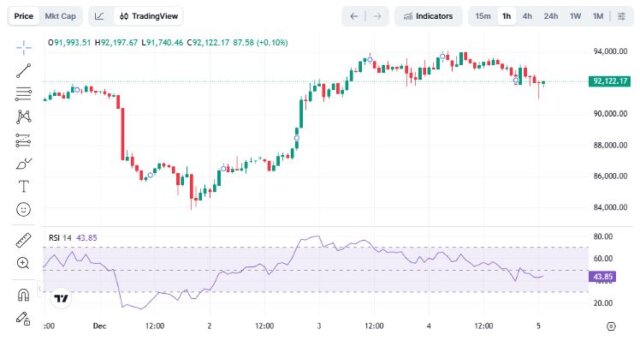
Bitcoin’s inability to sustain momentum above $93,500 has puzzled traders and analysts alike. Despite widespread anticipation of a Federal Reserve rate cut, the cryptocurrency market reacted with hesitation. According to report, Bitcoin briefly touched $93,500 before facing strong resistance, signaling that macroeconomic factors continue to dominate sentiment.
The fed rate cut impact on bitcoin has historically been mixed. While lower interest rates often encourage risk-taking and capital inflows into digital assets, the current environment reflects uncertainty. Investors appear cautious, balancing optimism about monetary easing with concerns over inflation and economic resilience.
The Role of Strong U.S. Jobs Data
Recent U.S. employment figures exceeded expectations, suggesting that the economy remains robust. This data reduced the urgency for aggressive rate cuts, dampening enthusiasm in risk markets. Bitcoin, often viewed as a hedge against monetary tightening, saw limited benefit from the news.
Market participants interpreted the strong jobs report as a sign that the Federal Reserve might delay or moderate its rate-cutting cycle. Consequently, traders adjusted their positions, leading to a temporary pullback in Bitcoin’s price.
Why Is Bitcoin Dropping Today? Examining Short-Term Pressures
The question why is bitcoin dropping today has multiple answers rooted in both technical and macroeconomic dynamics. On the technical side, Bitcoin’s failure to hold above $93,500 triggered profit-taking among short-term traders. The resistance level coincided with a key Fibonacci retracement zone, amplifying selling pressure.
From a macro perspective, the broader crypto market remains sensitive to shifts in liquidity and investor sentiment. The U.S. dollar’s relative strength and rising Treasury yields have also contributed to Bitcoin’s short-term weakness.
Institutional Behavior and Market Liquidity
Institutional investors have become increasingly influential in shaping Bitcoin’s price trajectory. Data from major exchanges show that large holders, or “whales,” have been reducing exposure near resistance levels. This cautious approach reflects a broader trend of risk management amid uncertain policy signals.
Liquidity conditions have also tightened slightly, with trading volumes declining compared to earlier in the quarter. Lower liquidity often amplifies volatility, making price swings more pronounced.
Fed Rate Cut Impact on Bitcoin: A Complex Relationship
The fed rate cut impact on bitcoin is not straightforward. Historically, rate cuts have supported asset prices by lowering borrowing costs and encouraging investment. However, Bitcoin’s reaction depends on broader market psychology.
When rate cuts are perceived as a response to economic weakness, investors may become risk-averse, reducing exposure to volatile assets like cryptocurrencies. Conversely, when cuts signal a supportive policy stance, Bitcoin tends to benefit from renewed speculative interest.
Comparing Past Market Cycles
During previous easing cycles, Bitcoin often experienced delayed reactions. For instance, in 2020, the Federal Reserve’s emergency rate cuts initially triggered market panic before fueling a historic rally later that year. This pattern suggests that Bitcoin’s response to monetary policy shifts can evolve over time as confidence returns.
Technical Analysis: Resistance and Support Levels
Bitcoin’s recent rejection at $93,500 highlights the importance of technical resistance zones. Analysts identify $91,000 as immediate support, followed by a stronger base near $88,500. A sustained break below these levels could invite further selling pressure.
On the upside, a decisive move above $93,500 could open the path toward $96,000 and eventually $100,000. However, momentum indicators such as the Relative Strength Index (RSI) suggest that Bitcoin remains in a consolidation phase.
Market Sentiment Indicators
Sentiment data from major analytics platforms show a neutral-to-bearish bias among retail traders. Funding rates on perpetual futures have normalized, indicating reduced speculative leverage. Meanwhile, long-term holders continue to accumulate, signaling confidence in Bitcoin’s long-term potential.
Bitcoin Price Prediction December 2025: Long-Term Outlook
Despite short-term volatility, analysts remain optimistic about the bitcoin price prediction december 2025. Many expect macroeconomic conditions, including potential rate cuts and institutional adoption, to support higher valuations over time.
Several factors could drive Bitcoin’s growth trajectory:
- Institutional adoption: Continued interest from asset managers and ETFs could boost liquidity and credibility.
- Halving event impact: The next Bitcoin halving, expected in 2028, may influence supply dynamics and investor expectations.
- Global monetary trends: Persistent inflation and currency devaluation could enhance Bitcoin’s appeal as a store of value.
Expert Opinions and Market Forecasts
Market strategists from leading financial institutions suggest that Bitcoin could trade between $120,000 and $150,000 by late 2025 if macroeconomic conditions remain favorable. However, they caution that regulatory developments and geopolitical risks could introduce volatility.
The Role of Investor Psychology
Investor sentiment remains a critical driver of Bitcoin’s price. As confidence in traditional markets fluctuates, digital assets often serve as alternative investment vehicles. The interplay between optimism and caution will likely define Bitcoin’s path through 2025.
Broader Implications for the Crypto Market
Bitcoin’s performance often sets the tone for the broader cryptocurrency ecosystem. Altcoins typically follow its lead, amplifying both gains and losses. The current consolidation phase may provide opportunities for accumulation before the next major breakout.
As the Federal Reserve’s policy direction becomes clearer, traders will continue to monitor how monetary shifts influence digital asset valuations. The evolving relationship between traditional finance and decentralized markets underscores Bitcoin’s growing role in global economic discourse.
Read Also: Vanguard Finally Embraces Bitcoin & Crypto ETFs
Disclaimer!! The information provided by CryptopianNews is for educational and informational purposes only. It should not be considered financial or investment advice. Cryptocurrency markets are highly volatile and speculative, and investing in them carries inherent risks. Readers are advised to conduct their own research and consult with a qualified financial advisor before making any investment decisions.

- Fed Balance Sheet Reduction Shakes Global Markets - January 30, 2026
- Inside the White House Crypto Meeting on Digital Assets - January 28, 2026
- Wall Street Warns: US Crypto Policy Clouds the Market - January 26, 2026