
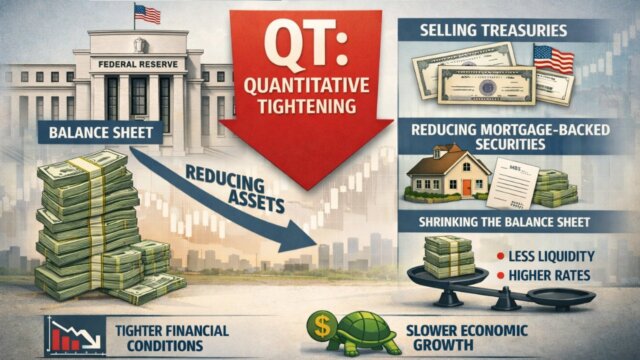
- Global markets react as fed balance sheet reduction signals tighter conditions, delaying easy money hopes and intensifying uncertainty for investors worldwide.
- Portfolio strategist Damian Boey notes that the Fed’s internal debate is becoming more complex, with official Walsh indicating a willingness to lower rates following a balance sheet reduction.
- The Fed’s balance sheet has historically supported asset prices by providing liquidity; reduced support may lead to initial subtle effects followed by sudden changes.
Financial markets are once again bracing for turbulence as the US Federal Reserve weighs a shift that could drain liquidity from the system. The idea gaining traction is not just about interest rates, but about shrinking the central bank’s massive footprint in markets. For investors already navigating uncertainty, even the hint of tighter conditions is enough to unsettle sentiment. According to comments shared by Damian Boey, portfolio strategist at Wilson Asset Management, the debate inside the Federal Reserve is becoming more nuanced. A Fed official, Walsh, has expressed openness to lower rates—but only after a fed balance sheet reduction takes place. That caveat has quickly rippled through global markets, triggering concern that easy money may not return as smoothly as some had hoped.
The Federal Reserve’s balance sheet has long acted as a silent backstop, quietly supporting asset prices by flooding the system with dollars. When that support is pulled back, the effects can be subtle at first, then sudden. Investors are now reassessing risk, wondering which assets are most exposed if liquidity tightens and financial conditions harden. Boey cautions that certain corners of the market could be particularly vulnerable. Gold, cryptocurrencies, and bonds have historically benefited from abundant liquidity and expanding central bank balance sheets. In a world shaped by fed balance sheet reduction, these assets may face renewed selling pressure as investors scramble for cash and reprice risk more conservatively.
History offers a useful guide. Previous rounds of quantitative tightening often coincided with weaker performance in speculative assets and inflation hedges. As dollar liquidity slows, capital tends to retreat from alternative markets and flow back toward safer, more liquid instruments. The result is often choppier trading, wider swings, and heightened sensitivity to central bank messaging. What makes the current moment especially delicate is how markets have evolved. Investors are no longer fixated solely on interest rate cuts or hikes. Instead, they dissect every signal about liquidity conditions, balance sheet policy, and the pace of monetary withdrawal. Even subtle hints of fed balance sheet reduction can now move prices as much as a formal rate decision.
As policymakers deliberate their next steps, market participants remain on edge. A smaller Fed balance sheet could mean less margin for error, fewer cushions during downturns, and sharper reactions to economic data. Whether this shift unfolds gradually or abruptly will likely define the next phase for gold, crypto, bonds, and beyond.
Disclaimer: CryptopianNews shares this for learning and info only. It’s not meant to be financial or investment advice. Crypto markets change a lot and move quickly. Investing in them can be risky. You should always look into things yourself. Talk to a trained financial advisor before making any choices about investing.

- Fed Balance Sheet Reduction Shakes Global Markets - January 30, 2026
- Inside the White House Crypto Meeting on Digital Assets - January 28, 2026
- Wall Street Warns: US Crypto Policy Clouds the Market - January 26, 2026