
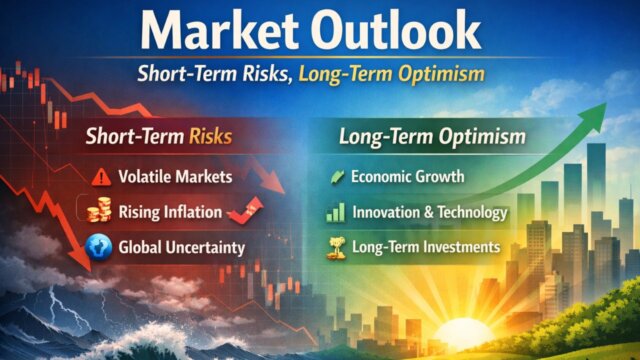
- Yi Lihua Market Outlook highlights why crypto feels shaky today, what smart money is doing now, and how patience shapes top long-term investment decisions.!
- Yi acknowledges the market’s instability and the psychological pressure traders face but believes the current weakness is temporary, pointing to macroeconomic factors favoring growth.
- He emphasizes the importance of maintaining a structured investment plan and advises against emotional reactions to market fluctuations.
- Yi’s optimistic outlook contrasts with prevailing pessimism, focusing on the long-term potential of investments, particularly in the U.S. equity market and regulatory environment.
The crypto industry is no stranger to market swings, dramatic sentiment shifts, and waves of investor anxiety. But when a well-known market voice steps in to offer perspective, people pay attention. This week, Liquid Capital founder Yi Lihua did just that. After sharing a detailed online commentary about the current state of the crypto sector, Yi began sparking conversations about volatility, strategy, and the resilience of long-term investment plans. Yi’s latest remarks — which quickly caught traction within crypto circles — acknowledge what many traders already feel: the market appears to be trembling under bearish pressure. Prices have wobbled, liquidity has thinned in spots, and investor confidence has been tested. However, instead of signaling defeat, Yi offered an interesting counterbalance. He argued that the weakness is only temporary and that macro forces still point toward growth rather than collapse. Throughout his commentary, Yi returned to one consistent theme: staying calm and keeping a structured investment plan matters far more than reacting emotionally to short-term turbulence. This message positions him as one of the few prominent investors willing to publicly blend caution with optimism at a time when skepticism dominates headlines.
A Bearish Climate, But Not a Doomsday Scenario
According to sources who viewed Yi’s January 26 post, the veteran entrepreneur described the market as “very unstable”, adding that bearish forces had reached their highest degree in recent months. In his view, crypto assets have been passing through a psychological pressure zone where traders expect bad news and react accordingly. Yet Yi refused to join the pessimists. He argued that uncertainty within crypto is partly overshadowed by the strength of U.S. equities and a clearer direction in digital asset policy discussions. U.S. stock performance, he said, indicates that investor capital hasn’t taken flight from risk assets entirely. Instead, capital appears to be rotating — with some sectors suffering temporarily while others gather momentum. Yi also suggested that the United States’ ongoing crypto regulatory roadmap may serve as a bullish foundation for the next chapter of growth. While many analysts still debate what form U.S. crypto rules will ultimately take, Yi believes the clarity is better than silence. In his view, rules — even tough ones — tend to attract institutional participation because they reduce risk and give traders long-term visibility.
Sticking With the Plan: Lessons from Ethereum’s Ups and Downs
Perhaps the most interesting part of Yi’s commentary was his explanation of why his own investment strategy has hardly changed. He recounted his earlier positioning in Ethereum — now the second-largest blockchain by market cap — which returned roughly 2.5x after a period of sideways consolidation. That past example set the stage for his current thinking. Even after Ethereum dropped from around $2,800 to $2,100, Yi described the movement as ordinary rather than alarming. The slide was amplified by geopolitical tensions in the Middle East, which triggered a sudden flight toward cash and defensive assets. However, instead of calling the dip a structural failure, Yi viewed it as another iteration of crypto’s characteristic roller coaster pricing. As he put it, “being bullish is like riding a roller coaster”, given that prices can swing up or down by millions within a matter of hours. While he delivered this point with humor, the message reflected serious experience. He emphasized that short-term price drama doesn’t necessarily change long-term fundamentals.
Risk, Reward, and the Reality Check for New Investors
Another prominent feature of Yi’s message was his reminder that investing is not a guaranteed path to profitability. If anything, he argued, tougher market environments tend to produce better opportunities because fear temporarily drives prices lower. For seasoned investors, these windows are moments where risk and reward become more attractive. Yi stressed that this mindset isn’t about recklessness or over-leveraging. Instead, it’s about respecting market cycles. New traders, he suggested, often chase green candles and panic when markets turn red. More experienced investors observe corrections and ask whether key fundamentals remain intact. Yi’s current plan appears relatively simple: accumulate more Ethereum during downturns. He pointed out that crypto cycles historically reward disciplined buying during corrections rather than emotional buying during rallies. The formula — buy weakness, sell strength — is hardly new, but many investors struggle to apply it because fear often outweighs logic. Yi Lihua market outlook suggests that he expects the broader crypto ecosystem to revive once capital flows finish rotating. Defensive assets like gold and silver have recently attracted investor attention, and Yi himself admitted to allocating funds toward both metals as safer short-term plays. However, he believes this safety migration won’t last forever. When markets stabilize, profits made in metals may be reallocated into higher-risk digital assets, pushing crypto prices higher again.
Macro Signals Still Lean Toward Optimism
One point Yi kept returning to is that crypto assets do not operate in isolation. Throughout financial history, markets have been interconnected, and digital currencies are no exception. When traditional assets perform well, or when liquidity expands in the broader economy, crypto usually benefits indirectly. Yi argued that as long as the U.S. stock market maintains strength and corporate earnings remain above recessionary thresholds, crypto will continue to have access to the liquidity needed for long-term appreciation. He also cited the increasing sophistication of crypto’s financial infrastructure — including institutional custodians, derivatives venues, and regulated trading tools — as evidence that the asset class has matured beyond the speculative chaos of past cycles. Regulation, once seen as an adversary to crypto, now appears to play a more supportive role. The development of national crypto strategies has reduced fears that digital assets could be banned entirely. Instead, governments seem more focused on tax compliance, consumer protection, and institutional adoption. While some traders view these measures as restrictive, Yi views them as essential pillars for the next era of responsible growth. Again, this reasoning reflects the measured hope embedded in the Yi Lihua market outlook, which acknowledges volatility without surrendering to it.
Why This Conversation Matters Right Now
Yi’s comments generated buzz partly because they arrived at a moment of significant stress in the market. Over the past few weeks, trading activity has slowed, funding rounds have cooled, and crypto-related search volume dipped. Analysts attributed the slowdown to uncertainty in interest rate forecasts and geopolitical anxieties that make risk assets harder to price. However, commentary from industry figures like Yi reminds investors that corrections are natural phases of market development, not death sentences. Throughout crypto’s history, downturns have often preceded major growth waves, particularly as new capital enters the ecosystem from institutional funds, sovereign wealth pools, and tech giants exploring blockchain integrations. In addition, investor psychology tends to operate in cycles. When fear peaks, prices dip. When risk appetite returns, prices accelerate. Yi argues that the market may be drifting toward the late stages of its fear cycle, meaning that capitulation — or a final washout of weak positions — could eventually open the door for the next expansionary chapter.
Is the Bottom Close? Yi Thinks So
While Yi was careful not to make precise predictions, he did express confidence that the lowest point of the crypto downturn will eventually pass. Markets, he argued, do not stay in survival mode forever. Panic selling exhausts itself, fundamentals regain attention, and new narratives emerge. When that happens, crypto tends to move fast — faster, in many cases, than traditional markets. His closing sentiment was simple: the industry has endured numerous crises over the past decade, and each one has made it stronger. From exchange collapses to regulatory crackdowns to liquidity crunches, crypto has absorbed hits that would have destroyed most new asset classes. That resilience forms the basis of Yi’s long-term bullishness. For traders and onlookers, Yi’s final takeaway acts as both reassurance and challenge: be prepared for volatility, but don’t assume that volatility equals disaster.
In a financial world full of noise, panic, and algorithm-driven speculation, Yi Lihua’s commentary stands out for its blend of realism and optimism. He recognizes that the market is shaky, that bearish pressure has intensified, and that sentiment remains fragile. Yet he also insists that these factors are temporary and that long-term structural trends still lean bullish. Whether investors agree with the Yi Lihua market outlook or adopt more cautious models, the debate underscores one important fact: crypto markets are entering a pivotal transition period. As capital moves between defensive assets and risk assets, opportunities will emerge for those who maintain discipline and perspective. For Yi, that translates into buying selectively during downturns rather than abandoning the sector altogether. While no investor can promise profits, Yi’s roadmap offers a reminder that strategy matters more than fear, and that corrections often lay groundwork for the next phase of growth. The crypto market may face turbulence today, but in his view, the cycle is far from over — and the most interesting chapters may still lie ahead.
Disclaimer: CryptopianNews shares this for learning and info only. It’s not meant to be financial or investment advice. Crypto markets change a lot and move quickly. Investing in them can be risky. You should always look into things yourself. Talk to a trained financial advisor before making any choices about investing.

- Cardano Midnight: Why Banks Prefer It Over ETH & SOL - March 31, 2026
- Why Is Bitcoin Down? Market Dip Explained - March 26, 2026
- AI in Blockchain Explained: BlackRock’s Vision for Crypto - March 25, 2026