
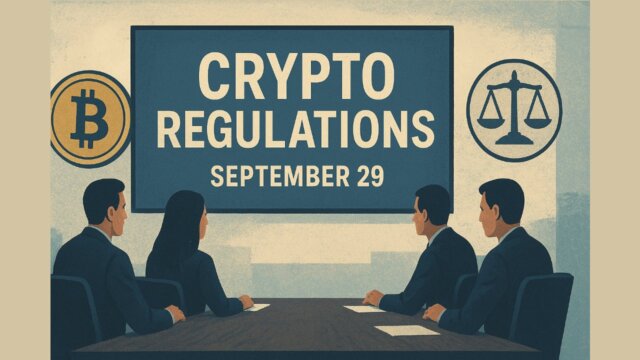
- SEC and CFTC Announce Crucial September 29 Meeting on Cryptocurrency Regulation, marking a pivotal step toward stronger oversight in the crypto space.
- The meeting aims to unify oversight and create a clearer pathway for innovation in digital finance.
- The lack of coordination between the two agencies has left the crypto industry in a state of uncertainty.
- The meeting will focus on crypto rules, prediction markets, decentralized finance (DeFi), and perpetual futures contracts.
In a major development for the cryptocurrency industry, the U.S. Securities and Exchange Commission (SEC) and the Commodity Futures Trading Commission (CFTC) have released a joint statement that has sent ripples across the financial and digital asset world. The announcement, made by SEC Chairman Paul Atkins and CFTC Deputy Chairman Caroline D. Pham, confirms that both agencies will be holding a joint meeting on September 29 to address some of the most pressing regulatory challenges and opportunities within the crypto ecosystem.
The upcoming meeting is expected to be one of the most impactful discussions on cryptocurrency regulation in recent years, signaling an effort to unify oversight and create a clearer pathway for innovation in digital finance. For investors, traders, developers, and policymakers, September 29 is now a date to watch closely.
Why This Meeting Matters for the Future of Crypto
For years, the SEC and CFTC have operated under somewhat overlapping jurisdictions when it comes to crypto regulation. While the SEC generally oversees securities, the CFTC regulates derivatives and futures markets. The lack of coordination between the two agencies has often left the crypto industry in a state of uncertainty. With cryptocurrencies like Bitcoin, Ethereum, and other digital assets gaining mainstream attention, the need for consistent and transparent rules has become urgent. The September 29 meeting aims to address these issues by fostering inter-agency cooperation and laying the groundwork for future regulatory frameworks. According to officials, the meeting will not only focus on crypto rules but also include discussions on prediction markets, decentralized finance (DeFi), and perpetual futures contracts.
Topics Expected to Dominate the Meeting
The SEC and CFTC have outlined a set of key focus areas that will be at the heart of the September 29 meeting. Each of these topics reflects the growing importance of cryptocurrencies in global markets and the regulatory challenges they bring.
1. Prediction Markets in Crypto
Prediction markets allow users to bet on the outcome of future events, from elections to economic indicators. These markets, often powered by blockchain, raise questions about legality, market manipulation, and investor protection. The agencies will consider whether these markets should be restricted, licensed, or allowed under strict conditions in the U.S.
2. Decentralized Finance (DeFi)
DeFi platforms have exploded in popularity by offering peer-to-peer lending, borrowing, and trading without intermediaries. However, their decentralized nature makes them difficult to regulate under current laws. The agencies plan to explore how rules can be adapted to address risks in DeFi while still supporting its innovative potential.
3. Perpetual Futures Contracts
Perhaps the most significant issue on the agenda is the potential introduction of perpetual contracts into U.S. markets. These contracts, popular on offshore exchanges, allow traders to speculate without an expiration date. Currently, U.S. laws restrict their use, pushing much of the trading activity abroad. Regulators are now considering whether safe, regulated perpetual contracts could be introduced domestically to keep economic activity within the U.S.
Why Perpetual Contracts Could Be a Game-Changer
Perpetual contracts are already a major driver of trading activity in offshore crypto markets. Their flexibility and liquidity make them highly attractive to both retail and institutional investors. However, because they are banned under current U.S. rules, traders seeking these products often turn to foreign exchanges with fewer investor protections. This creates significant risks, including exposure to unregulated platforms and a loss of potential tax revenue and market activity for the U.S. If the SEC and CFTC decide to approve regulated perpetual contracts, it could:
- Bring trading activity back onshore to U.S.-based exchanges.
- Provide investors with stronger protections, including leverage limits and risk management safeguards.
- Make U.S. markets more competitive globally.
- Strengthen the regulatory framework without stifling innovation.
This shift would not only help investors but also strengthen the overall financial system, ensuring that new crypto products are launched responsibly under transparent oversight.
Closing the Regulatory Gap Between SEC and CFTC
One of the most anticipated outcomes of this meeting is the possibility of aligning rules between the SEC and CFTC. Currently, the lack of clarity has left crypto firms struggling to comply with multiple, sometimes conflicting, regulations. For example:
- Some digital assets may be classified as securities under SEC rules.
- Others might fall under the CFTC’s jurisdiction as commodities or derivatives.
- Many products sit in a regulatory gray area, causing confusion and legal challenges.
By working together, the agencies aim to close these gaps, create a harmonized regulatory framework, and ensure that crypto innovation is not stifled by outdated or conflicting rules.
Live Public Access: A Sign of Transparency
In another significant move, the SEC and CFTC confirmed that the September 29 meeting will be streamed live to the public. This transparency indicates the agencies’ intention to involve investors, stakeholders, and the general public in the conversation. Allowing open access to such discussions is seen as a trust-building measure, ensuring that the process is not only designed behind closed doors but also reflects market realities and investor concerns.
The September 29 SEC and CFTC joint meeting represents a pivotal moment for the cryptocurrency industry in the United States. By addressing prediction markets, DeFi, and perpetual contracts, regulators are tackling some of the most important and controversial aspects of the digital asset world. If the discussions lead to a balanced regulatory framework, the U.S. could reclaim its position as a leader in crypto innovation, ensuring that markets remain competitive, safe, and transparent. However, if rules become too rigid, there is a real danger that innovation will continue to migrate overseas. One thing is clear: the eyes of the crypto world will be firmly fixed on September 29. This meeting could set the stage for the next phase of digital finance in the United States and beyond.
Disclaimer: CryptopianNews shares this for learning and info only. It’s not meant to be financial or investment advice. Crypto markets change a lot and move quickly. Investing in them can be risky. You should always look into things yourself. Talk to a trained financial advisor before making any choices about investing.

- Why Cryptocurrency Infrastructure Is Beyond Speculation - January 31, 2026
- Fed Balance Sheet Reduction Shakes Global Markets - January 30, 2026
- Inside the White House Crypto Meeting on Digital Assets - January 28, 2026