
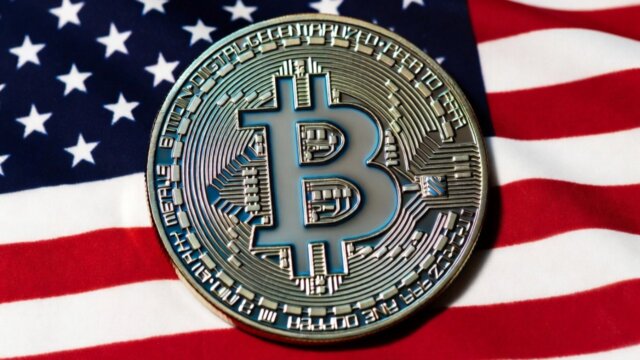
- By lowering reliance on foreign-controlled financial institutions and protecting value during times of geopolitical crisis, Bitcoin enhances US national security.
- Military leaders see decentralized networks as tools for power projection and deterrence.
- This shift could redefine how digital assets influence global competition, especially with China.
Bitcoin is no longer just a digital currency for investors and traders. Instead, it is entering a new phase where governments and military leaders are taking it seriously. Recently, Admiral Samuel Paparo, head of U.S. Indo-Pacific Command, highlighted how Bitcoin could play a role in global strategy. His remarks show a growing belief that decentralized technology can influence power dynamics between nations. As a result, the idea of Bitcoin national security is becoming more relevant than ever.
The Strategic Rise of Bitcoin national security
Bitcoin’s journey from a niche innovation to a strategic tool has been remarkable. Initially, it was viewed as a speculative asset with high volatility. However, over time, its underlying technology—blockchain—has proven to be secure, transparent, and resistant to control. Because of this, military thinkers now see its potential beyond finance. Admiral Paparo emphasized that Bitcoin’s proof-of-work system offers unique advantages. For instance, it provides a secure and decentralized way to transfer value without relying on traditional systems. This matters because centralized systems can be targeted or disrupted during conflicts. In contrast, Bitcoin operates independently, making it harder to shut down or manipulate. Moreover, the concept of “zero-trust” systems is gaining traction. These systems do not rely on a single authority, which increases resilience. Therefore, Bitcoin could support intelligence operations and secure communications. As global tensions rise, especially in the Indo-Pacific region, such tools become increasingly valuable.
How Decentralized Networks Shape Global Power
Decentralized networks like Bitcoin are changing how nations think about power. Traditionally, military strength depended on physical assets such as weapons and troops. However, digital infrastructure is now just as important. Because of this shift, countries are exploring new ways to gain an advantage. China, for example, has reportedly studied Bitcoin and blockchain technology for strategic purposes. While it has restricted cryptocurrency trading, it continues to invest in research. This shows that even countries with strict controls recognize the importance of decentralized systems. Consequently, the competition between major powers is expanding into the digital space. At the same time, the United States is considering how Bitcoin can support its national interests. Some discussions even include the idea of a strategic Bitcoin reserve. This would be similar to holding gold but in digital form. If implemented, it could strengthen financial resilience and provide a hedge against global instability. Furthermore, Bitcoin enables peer-to-peer transactions without intermediaries. This feature can be useful in conflict zones where traditional banking systems may fail. As a result, it offers practical benefits for both military and humanitarian operations.
From Speculation to Institutional Adoption
Bitcoin’s price movements often grab headlines, especially as it hovers near significant levels like $78,000. However, its growing institutional acceptance is even more important. Governments, corporations, and financial institutions are beginning to see its long-term value. Therefore, its role is shifting from speculation to utility. This transformation is also changing public perception. Instead of being seen as risky or unregulated, Bitcoin is gaining legitimacy. For example, policymakers are now discussing its potential in official settings, including Congress. This marks a major milestone in its evolution. In addition, Bitcoin’s transparency makes it attractive for certain applications. Every transaction is recorded on a public ledger, which enhances accountability. This can be useful in tracking funds and ensuring compliance. As a result, it aligns with broader goals of security and efficiency. However, challenges remain. Regulatory uncertainty, energy consumption, and market volatility are still concerns. Even so, ongoing innovation is addressing these issues. Over time, improvements in technology and policy could strengthen Bitcoin’s role in global systems.
In conclusion, the idea of Bitcoin national security reflects a major shift in how digital assets are viewed. No longer limited to finance, Bitcoin is now part of strategic discussions at the highest levels. As nations compete for influence, decentralized technologies could become key tools in shaping the future of global power.
Disclaimer: CryptopianNews shares this for learning and info only. It’s not meant to be financial or investment advice. Crypto markets change a lot and move quickly. Investing in them can be risky. You should always look into things yourself. Talk to a trained financial advisor before making any choices about investing.

- Bitcoin tightest session: Why Traders Are Watching $65K - July 20, 2026
- Can 5x Bitcoin Still Happen This Market Cycle? - July 18, 2026
- Capital Is Chasing AI: Why Bitcoin Is Waiting Its Turn - July 2, 2026