

- Market update on macro factors such as inflation data, interest rate expectations, and their impact on crypto sentiment.
- Bitcoin faces key resistance at $76,000, with downside risk toward $66,000.
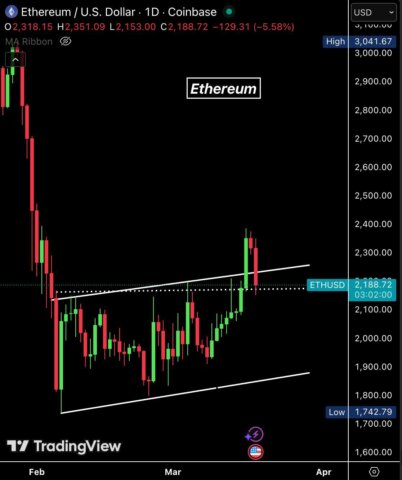
- Ethereum is testing a crucial breakout zone that could decide its next move.
- Global tensions, rising inflation, and Fed signals are shaping short-term market direction.
The latest market update shows a fragile crypto landscape influenced by both technical levels and global macro events. Prices are reacting not just to charts, but also to real-world developments like geopolitical tensions and economic data. As a result, traders need to stay alert and understand the bigger picture. Right now, both Bitcoin and Ethereum are at critical levels. Meanwhile, external factors such as oil price spikes and inflation data are adding pressure. Let’s break down what’s happening and what it could mean for the coming days.
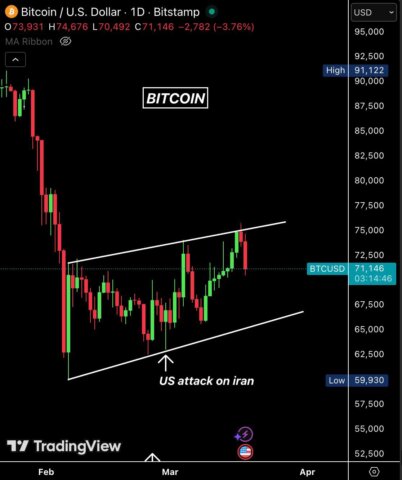
Bitcoin and Ethereum Price Levels in This Market Update
Bitcoin has recently faced rejection at the $76,000 resistance level. This signals strong selling pressure, which often leads to short-term pullbacks. As a result, the next major support sits around $66,000, a level traders are watching closely. If Bitcoin drops to this zone, buyers may step in to defend the trend. However, if support fails, it could trigger further downside. Therefore, the coming days are crucial for confirming whether the current trend remains intact or weakens further. On the other hand, Ethereum is testing a key breakout range between $2,180 and $2,200. This zone acts as a decision point for the market. If bulls hold this level, ETH could push higher and regain momentum. However, failure to maintain support may lead to a drop toward $1,900. In short, Ethereum’s price action is tightly balanced, and even small shifts in sentiment could drive big moves.
Key Global Events Impacting Crypto Markets
Several major events are shaping market behavior right now. First, geopolitical tensions have escalated after the US struck Iran’s South Pars gas facility. This sudden move caused oil prices to spike to $99, which directly impacts global markets. Higher oil prices often increase inflation. As a result, investors tend to move away from risk assets like cryptocurrencies. This creates downward pressure on Bitcoin and Ethereum. Second, the Producer Price Index (PPI) data came in hotter than expected, showing a 3.4% year-on-year increase. This indicates that inflation is still building in the pipeline. Consequently, markets are becoming cautious, as rising inflation can lead to tighter financial conditions. Finally, the Federal Reserve held interest rates steady. However, Jerome Powell acknowledged Middle East tensions for the first time. This statement triggered a negative market reaction, showing how sensitive investors are to global uncertainty.
Market Sentiment and Short-Term Outlook
The overall sentiment remains cautious. When multiple risk factors appear at once, markets tend to slow down or move lower. In this case, rising oil prices, inflation concerns, and geopolitical stress are all working against bullish momentum. Historically, Bitcoin often shows weakness in the 7–10 days following FOMC meetings. This pattern suggests that traders should prepare for possible short-term volatility. While this does not guarantee a drop, it increases the likelihood of choppy price action. Moreover, if oil prices continue rising, the pressure on all financial assets will likely increase. This includes cryptocurrencies, which are already sensitive to macroeconomic changes. Therefore, traders should monitor both charts and news closely. In the short term, holding key support levels will be critical. If Bitcoin and Ethereum manage to stay above their respective supports, the market could stabilize. Otherwise, a deeper correction may follow.
Conclusion
This market update highlights how both technical levels and global events are shaping crypto trends. Bitcoin’s rejection at resistance and Ethereum’s struggle at a key zone show that the market is at a turning point. At the same time, rising oil prices, higher inflation data, and cautious Fed signals are adding pressure. Therefore, the next few days will be crucial for determining direction. Staying informed and watching key levels can help traders navigate this uncertain phase.
Disclaimer: CryptopianNews shares this for learning and info only. It’s not meant to be financial or investment advice. Crypto markets change a lot and move quickly. Investing in them can be risky. You should always look into things yourself. Talk to a trained financial advisor before making any choices about investing.

- Bitcoin tightest session: Why Traders Are Watching $65K - July 20, 2026
- Can 5x Bitcoin Still Happen This Market Cycle? - July 18, 2026
- Capital Is Chasing AI: Why Bitcoin Is Waiting Its Turn - July 2, 2026