
- Stephen Miran, a former Treasury official nominated by Donald Trump for a Federal Reserve governor role, revived the idea of a third mandate in the U.S. Federal Reserve.
- The third mandate requires the Fed to manage inflation and unemployment while ensuring sustainable long-term interest rates.
- Trump’s team sees this as a legal basis for a more activist approach to interest rate management, potentially involving yield curve control.
For decades, the U.S. Federal Reserve has been defined by its dual mandate: keeping prices stable and ensuring maximum employment. These two goals have guided interest rate decisions, balance sheet management, and the Fed’s overall approach to monetary policy. But a new conversation is shaking up this long-standing framework. Earlier this month, Stephen Miran, a former Treasury official nominated by Donald Trump for a Federal Reserve governor role, revived the idea of a third mandate.
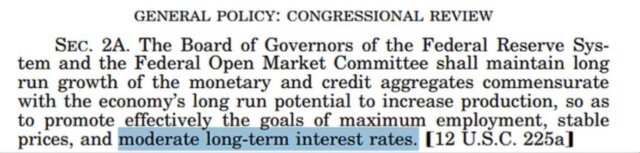
The notion of a third mandate isn’t new—it comes from the Fed’s original charter. Alongside employment and price stability, the Federal Reserve Act also directs the central bank to aim for “moderate long-term interest rates.” For years, this clause was treated as secondary, almost a natural byproduct of achieving the other two goals. Yet, if policymakers choose to emphasize it, the consequences for the U.S. economy, financial markets, and even cryptocurrency could be profound.
What Does the “Third Mandate” Really Mean?
The third mandate refers to the requirement that the Fed not only manage inflation and unemployment but also ensure that long-term interest rates remain at sustainable levels. Historically, Fed officials argued that stable prices and full employment naturally supported moderate borrowing costs. However, Trump’s team sees this as a legal basis for a more activist approach to interest rate management. Such an approach could involve yield curve control—a policy where the Fed buys bonds to cap or suppress long-term interest rates. Yield curve control was famously used by the Bank of Japan and during wartime financing in the United States. By setting limits on how high yields can rise, the Fed would effectively lock in cheap borrowing costs for the government and households. This move could drastically reshape bond markets, where trillions of dollars move daily based on expectations of future interest rates.
Why Now?
The timing of this revived discussion is no coincidence. The U.S. national debt has surged past $37.5 trillion, creating enormous pressure on the government to find ways to finance its obligations more cheaply. Lower long-term rates would mean reduced borrowing costs on Treasury bonds, easing the fiscal burden. At the same time, the housing market—long seen as a barometer of consumer confidence—has been struggling under the weight of higher mortgage rates. If the Fed were to push those rates lower, it could help reignite demand for housing, a politically popular outcome. Donald Trump has been vocal about his preference for “cheap money.” During his presidency, he often criticized Fed Chair Jerome Powell for being too slow to cut rates. Now, with his allies floating the third mandate as a justification, Trump could push the Fed toward even more aggressive monetary easing.
Potential Policy Tools
To enforce the third mandate, the Federal Reserve could consider several strategies:
- Yield Curve Control (YCC): Direct intervention in bond markets to cap long-term interest rates.
- Quantitative Easing (QE): Large-scale asset purchases aimed at flooding the system with liquidity.
- Treasury Bill Issuance and Bond Buybacks: Adjusting the mix of government debt to lower financing costs.
- Money Printing: Expanding the monetary base to support government borrowing and economic stimulus.
Each of these tools carries risks. Yield curve control could distort financial markets, leading to asset bubbles. QE could fuel inflation if not managed carefully. But from the Trump administration’s perspective, these are acceptable trade-offs to achieve growth and stabilize debt costs.
Impact on the U.S. Dollar
A more aggressive focus on the third mandate could weaken the U.S. dollar. Historically, when central banks suppress interest rates or increase money printing, their currencies face downward pressure. A weaker dollar could make U.S. exports more competitive, but it would also raise the cost of imports and potentially stoke inflation. Global investors often view the dollar as a safe haven. If confidence erodes due to perceived financial engineering by the Fed, capital could flow elsewhere. That’s where cryptocurrency—especially Bitcoin—enters the conversation.
Why Crypto Could Benefit
Several analysts see the third mandate as a potential windfall for digital assets. Christian Pusateri, founder of Mind Network, described it bluntly as “financial repression by another name.” By artificially holding down interest rates, the Fed could encourage investors to seek returns in alternative markets. Bitcoin, in particular, is increasingly viewed as a hedge against the global financial system. Unlike fiat currencies, it has a capped supply of 21 million coins. If the Fed expands money printing or enforces yield curve control, many investors may perceive Bitcoin as a store of value immune to government manipulation.
Arthur Hayes, co-founder of BitMEX, has gone even further, suggesting that aggressive yield curve control could propel Bitcoin’s price to $1 million. While such forecasts may sound extreme, they underscore a growing belief that crypto will thrive in an environment of suppressed interest rates and rising government debt.
The third mandate may sound like a technical footnote in the Federal Reserve’s charter, but its revival could mark a turning point in U.S. monetary policy. By prioritizing moderate long-term interest rates, the Fed could pursue yield curve control, large-scale money printing, and aggressive bond market interventions. While this may provide short-term relief for government borrowing and the housing market, it risks weakening the dollar and fueling inflationary pressures.
For cryptocurrencies like Bitcoin, however, the picture is brighter. As faith in traditional monetary policy erodes, digital assets could attract record levels of investment. Whether Bitcoin truly reaches $1 million remains to be seen, but the third mandate debate underscores a growing divide: trust in government-backed money versus trust in decentralized alternatives. One thing is clear—the Fed’s future path will not only shape the U.S. economy but could also define the trajectory of the crypto revolution.
Disclaimer: CryptopianNews shares this for learning and info only. It’s not meant to be financial or investment advice. Crypto markets change a lot and move quickly. Investing in them can be risky. You should always look into things yourself. Talk to a trained financial advisor before making any choices about investing.

- Why Cryptocurrency Infrastructure Is Beyond Speculation - January 31, 2026
- Fed Balance Sheet Reduction Shakes Global Markets - January 30, 2026
- Inside the White House Crypto Meeting on Digital Assets - January 28, 2026