

- Crypto classified as commodities lowers compliance barriers and accelerates institutional adoption across funds, banks, and markets.
- Major assets like BTC, ETH, SOL, and XRP are now treated as commodities.
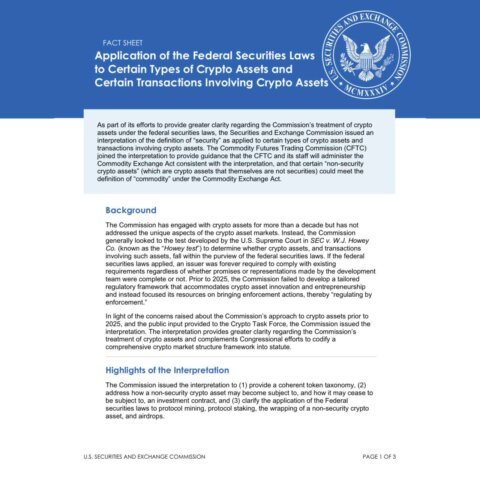
- Staking, mining, airdrops, and token wrapping are no longer considered securities activities.
- Institutional investors now have clearer legal pathways to enter the crypto market.
- Some risks remain, especially for past token sales and certain NFT structures.
The crypto industry just witnessed a major turning point. On March 17, 2026, regulators in the United States made a long-awaited move that reshaped the entire landscape. For years, confusion slowed innovation and scared away big investors. Now, with crypto classified as commodities, the market finally has a clearer direction. This decision doesn’t just affect traders—it impacts developers, institutions, and everyday users. More importantly, it builds trust. As a result, the industry is moving closer to mainstream finance, opening doors that were previously shut.
Understanding the New Era of Crypto Classified as Commodities
The biggest takeaway from this rule is simple: many popular cryptocurrencies are no longer in a gray area. Instead, they are officially treated as commodities. This includes Bitcoin, Ethereum, Solana, XRP, and several others. Because of this shift, oversight now aligns more closely with traditional commodity markets. That means clearer rules, better compliance, and reduced legal confusion. At the same time, it removes the constant fear of sudden enforcement actions that once shook the market. In addition, this clarity helps companies plan long-term strategies. Projects can now build without worrying about unexpected classification changes. Consequently, innovation may speed up as developers feel more secure in their work.
Key Activities No Longer Considered Securities
One of the most impactful parts of this rule is what it removes from the “securities” label. For example, staking—whether solo, delegated, or custodial—is no longer treated as a securities transaction. This is a huge win for blockchain networks that rely on staking for security. Similarly, Bitcoin mining is now viewed as a service rather than an investment contract. This distinction matters because it separates operational work from financial speculation. As a result, miners can operate with more confidence and less regulatory pressure. Airdrops also received clarity. If tokens are distributed without conditions, they are not securities. Furthermore, token wrapping across blockchains is now seen as a technical process, not a financial one. Together, these changes remove several major roadblocks for crypto users and developers.
Institutional Investors Finally Get Legal Clarity
For years, large institutions hesitated to enter crypto markets. The main reason was regulatory uncertainty. However, with crypto classified as commodities, that hesitation may start to fade. Now, hedge funds, banks, and asset managers have a clearer framework to follow. This makes compliance easier and reduces legal risks. As a result, we may see increased capital flowing into the crypto space. Moreover, institutional involvement often brings stability. When bigger players enter the market, liquidity improves and volatility may decrease. Therefore, this shift could benefit both retail and professional investors over time.
Remaining Risks and Regulatory Gray Areas
Despite the positive news, not everything is risk-free. Past token sales from 2017 to 2025 are still under scrutiny. If those sales were unregistered, companies could face legal consequences. In addition, ongoing fundraising tied to development promises may still be considered securities. This means projects must be careful about how they raise funds moving forward. Otherwise, they could fall back into regulatory trouble. NFTs also remain a gray area. While simple NFTs are generally safe, fractionalized versions may be treated as securities. Therefore, investors should stay cautious and do proper research before jumping in.
The Future of Crypto Regulation and Market Growth
Looking ahead, this decision sets the stage for long-term growth. With crypto classified as commodities, the industry is slowly integrating into the global financial system. This could lead to more adoption, better infrastructure, and stronger investor confidence. Another important development is the upcoming stablecoin framework under the GENIUS Act. While regulated payment stablecoins may gain exemptions, yield-generating products will likely face restrictions. This shows that regulators are encouraging stability while limiting risky financial behavior. Overall, the direction is clear. Governments want crypto to thrive, but within established financial rules. As a result, the market may become safer, more predictable, and more appealing to a wider audience.
Conclusion
The March 17, 2026 ruling marks a historic shift in the crypto world. It removes years of uncertainty and provides a solid foundation for growth. With crypto classified as commodities, investors and developers finally have the clarity they need to move forward. However, challenges still exist. Past actions, fundraising methods, and certain NFT models remain under scrutiny. Even so, the overall outlook is positive. As regulation becomes clearer, the path toward mainstream adoption looks stronger than ever.
Disclaimer: CryptopianNews shares this for learning and info only. It’s not meant to be financial or investment advice. Crypto markets change a lot and move quickly. Investing in them can be risky. You should always look into things yourself. Talk to a trained financial advisor before making any choices about investing.

- BTC stuck in a range: Large Buyers Signal Strength - July 20, 2026
- CLARITY Act Odds Drop to 35% After DOJ Warning - July 18, 2026
- Strategy Updates Financial Policy for Bitcoin Holdings - July 2, 2026