
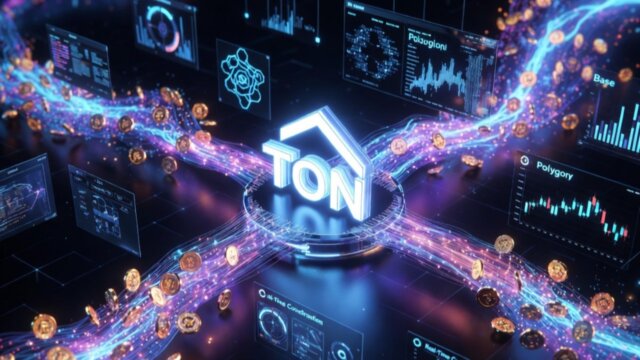
- Omniston latest sandbox update introduces new tools for testing liquidity movement between TON, Base, and Polygon.
- Developers can now explore coordinated routing, execution tracking, and settlement flows across multiple blockchains.
- The broader DeFi market is moving toward interoperable systems that reduce fragmented user experiences and improve liquidity access.
The blockchain industry is entering a new phase where interoperability matters just as much as speed and scalability. For years, most decentralized finance platforms focused mainly on improving swaps and liquidity inside their own ecosystems. However, that approach often created isolated environments where users had to jump between bridges, wallets, and protocols just to move assets across chains. Now, projects building on TON are beginning to push beyond those limitations. The latest Omniston v1beta8 sandbox update shows how the ecosystem is gradually evolving into a larger execution and settlement network. Instead of only aggregating liquidity, Omniston is working toward creating a smoother framework for coordinated asset movement between chains like Base, Polygon, and TON itself. As a result, developers are starting to gain access to more advanced testing environments that could shape the future of decentralized finance.
How cross-chain swap infrastructure Is Expanding Beyond Aggregation
The newest Omniston sandbox release marks an important step for multi-chain development. Previously, most routing systems inside the TON ecosystem focused on finding the best swap paths within a single network. While that improved efficiency, it still limited how users interacted with external ecosystems. Now, developers can test TON ↔ Base and TON ↔ Polygon swap flows directly inside isolated sandbox environments. This creates a controlled space where builders can experiment with routing logic, settlement tracking, and liquidity coordination before deploying products to real users. Consequently, developers can identify issues earlier and refine user experiences more effectively.
The update also introduces quote discovery systems and RFQ testing environments. These features allow applications to simulate real market conditions and compare pricing opportunities across networks. Instead of relying on simple bridging systems, protocols can begin coordinating execution steps across multiple chains in a more organized way. Another important addition is mock resolver testing. This feature helps simulate how liquidity providers and execution layers might behave during complex cross-network transactions. Because of this, teams can test how assets move between ecosystems while minimizing the risks associated with early-stage infrastructure.
Omniston’s Role in Multi-Chain Liquidity Coordination
Omniston is slowly positioning itself as more than a traditional routing protocol. The platform is beginning to function as a framework for execution coordination and interoperable settlement. Although the technology is still early, the direction is becoming increasingly clear. One major challenge in DeFi has always been fragmented liquidity. Users often face delays, extra fees, and confusing workflows when moving assets between ecosystems. For example, a trader moving liquidity from Polygon to TON may need separate bridges, exchanges, and settlement layers to complete a single transaction. As a result, the experience feels disconnected and inefficient. The evolving architecture behind Omniston aims to simplify this process. By introducing coordinated execution flows, the platform could eventually help users access liquidity across multiple ecosystems without navigating separate interfaces. This is where the idea of cross-chain swap infrastructure becomes much more significant than a standard bridge or swap aggregator.
In addition, settlement tracking systems are becoming increasingly important for blockchain interoperability. Developers need reliable ways to monitor whether transactions complete correctly across multiple networks. Omniston’s testing framework provides an early environment for experimenting with these execution pathways and settlement confirmations. The inclusion of isolated sandbox testing also benefits builders working on scalability solutions. Since developers can safely simulate different liquidity scenarios, they can optimize routing paths before real-world deployment. Therefore, projects may eventually offer faster and more reliable cross-chain user experiences.
Why Multi-Chain Execution Could Shape the Future of DeFi
The broader DeFi industry is steadily moving toward interoperability. Instead of competing as isolated ecosystems, many blockchain networks are beginning to recognize the value of coordinated liquidity access. This trend is especially important as users demand smoother asset movement between chains. TON’s expanding infrastructure reflects that larger market shift. Rather than focusing only on internal optimization, the ecosystem is exploring how liquidity orchestration can function across external networks like Base and Polygon. Consequently, developers gain more flexibility when building decentralized applications. This transition could also reduce friction for mainstream users. In many cases, onboarding into DeFi remains difficult because transactions across chains require multiple steps. However, coordinated execution frameworks may eventually hide much of that complexity behind simpler interfaces. Users could access liquidity across ecosystems without worrying about which chain handles settlement in the background.
Another advantage involves capital efficiency. When liquidity becomes easier to coordinate across ecosystems, protocols may reduce idle assets sitting on separate chains. Instead, routing systems can dynamically access liquidity where it is most useful. This can improve execution quality while lowering unnecessary fragmentation. Even though the technology remains in its early stages, the long-term implications are substantial. Developers are no longer just experimenting with swaps; they are testing how interoperable execution systems might power the next generation of decentralized finance. Therefore, the current sandbox developments may represent the foundation for much larger infrastructure in the future.
The latest Omniston update highlights how decentralized finance is evolving beyond isolated blockchain ecosystems. By introducing testing environments for coordinated execution, settlement tracking, and liquidity orchestration, the TON ecosystem is moving closer to seamless interoperability. The development of cross-chain swap infrastructure signals a broader transition toward interconnected DeFi systems where users can move assets more efficiently across networks. Although the technology is still developing, the momentum toward multi-chain execution frameworks is becoming increasingly visible across the blockchain industry.
Disclaimer: CryptopianNews shares this for learning and info only. It’s not meant to be financial or investment advice. Crypto markets change a lot and move quickly. Investing in them can be risky. You should always look into things yourself. Talk to a trained financial advisor before making any choices about investing.

- Bitcoin Highest Weekly Close Signals Bullish Momentum - July 20, 2026
- Biggest Crypto Catalysts to Watch Before the Next Rally - July 18, 2026
- Stock Market Open Could Decide Bitcoin’s Next Move - July 2, 2026