
Important Points
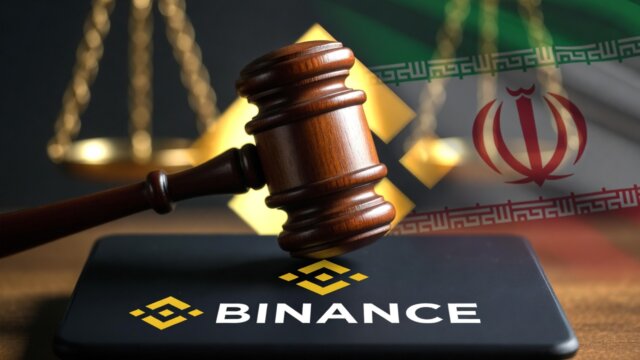
- A US federal court dismissed a lawsuit accusing Binance of enabling terrorist financing through cryptocurrency transactions.
- The lawsuit involved 535 plaintiffs linked to 64 attacks between 2016 and 2024.
- The judge ruled that plaintiffs failed to prove a direct connection between Binance activity and the attacks.
- Meanwhile, 11 US senators questioned Binance over alleged Iran-linked crypto transactions worth more than $1 billion.
- Binance denied the accusations and said reports about the Iran transactions were inaccurate and misleading.
- Former CEO Changpeng Zhao stated that centralized exchanges have no economic incentive to assist terrorist organizations.
Court Dismissal Reshapes the Binance Legal Battle
The Binance Iran transaction scrutiny terrorism case reached a major turning point after a US federal judge dismissed the lawsuit against the exchange. The case had accused Binance of facilitating transactions linked to terrorist organizations. However, the court concluded that the plaintiffs did not provide sufficient evidence.
The lawsuit represented 535 individuals connected to 64 terrorist attacks that occurred between 2016 and 2024. The plaintiffs argued that groups such as ISIS, Hamas, Hezbollah, al-Qaeda, and Palestinian Islamic Jihad used cryptocurrency networks connected to the exchange.
However, the court found that the legal claims relied mainly on indirect allegations. Therefore, the judge ruled that the plaintiffs failed to demonstrate a clear operational link between Binance and the attacks themselves.
Why the court rejected the claims
The judge emphasized that large financial platforms process millions of transactions daily. As a result, linking an exchange directly to specific criminal incidents requires clear proof.
The court acknowledged that illegal activity may occur on open financial networks. Nevertheless, the plaintiffs did not demonstrate that the exchange knowingly supported those groups.
What the ruling means for crypto platforms
The dismissal highlights a key legal challenge for cryptocurrency companies. Global exchanges operate open trading infrastructure used by millions of users.
Therefore, regulators and courts often struggle to determine when a platform becomes legally responsible for user behavior.
US senators Binance Iran allegations raise political pressure
Although the lawsuit was dismissed, regulatory scrutiny continues to intensify. In particular, US senators Binance Iran allegations created new political pressure on the company.
A group of 11 US senators sent a letter to Binance requesting information about alleged transactions connected to Iranian entities. Reports suggested that more than $1 billion in crypto transfers may have passed through the exchange.
The lawmakers also referenced reports involving entities called Hexa Whale and Blessed Trust, which allegedly conducted large transfers on the platform.
Binance response to the investigation
Binance rejected the claims and said the investigation relied on inaccurate reporting. The company stated that the allegations were “demonstrably false.”
Moreover, Binance explained that its compliance systems monitor transactions for sanctions violations. The exchange also said it cooperates with international authorities when suspicious activity appears.
Growing scrutiny from lawmakers
Crypto regulation remains a major concern for US policymakers. Lawmakers increasingly question whether exchanges have strong enough safeguards to prevent sanctions evasion.
Consequently, platforms that operate globally face growing political pressure.
Binance sanctions compliance news 2026 shows industry shift
Recent Binance sanctions compliance news 2026 illustrates how the crypto industry is adapting to tighter regulations.
In 2023, Binance reached a $4.3 billion settlement with US authorities over compliance violations. As part of the agreement, Changpeng Zhao stepped down as CEO.
Since then, the company has implemented major reforms to improve compliance systems.
Key compliance upgrades at Binance
The exchange has introduced several major improvements:
- Expanded Know-Your-Customer verification procedures
- Advanced transaction monitoring tools
- Larger global compliance teams
- Improved sanctions screening systems
These changes aim to reduce risks associated with illicit finance.
Industry-wide compliance transformation
Centralized exchanges now invest heavily in regulatory infrastructure. Governments worldwide expect stronger monitoring of digital asset transactions.
Because blockchain transactions remain traceable, analytics firms increasingly help regulators track suspicious flows.
Crypto industry reaction and CZ’s defense of exchanges
The court decision triggered a strong response from industry leaders. Former Binance CEO Changpeng Zhao defended centralized exchanges against accusations of enabling terrorism.
Zhao argued that exchanges generate revenue primarily from trading activity. Terrorist groups usually move funds quickly rather than trade frequently.
Therefore, such actors generate very little revenue for exchanges.
Why exchanges avoid illicit activity
Crypto platforms have strong incentives to maintain compliance. Regulatory penalties can reach billions of dollars and damage global operations.
As a result, exchanges increasingly prioritize risk monitoring and compliance programs.
The broader reputation challenge
Despite these efforts, the crypto sector still faces skepticism from regulators and policymakers. Some critics believe digital assets enable sanctions evasion and illicit finance.
However, blockchain transparency often allows investigators to trace transactions more easily than traditional financial systems.
Consequently, debates around crypto compliance and financial crime prevention are likely to continue.
Read Also: CZ vs Peter Schiff Gold Debate: What Happened at Binance Blockchain Week
Disclaimer!! CryptopianNews provides this information for educational and informational purposes only. You should not consider it financial or investment advice. Cryptocurrency markets are highly volatile and speculative, and they carry inherent risks. We advise readers to conduct their own research and to consult with a qualified financial advisor before making any investment decisions.

- QuFi Post-Quantum Verification Platform: A New Infrastructure Layer for Digital Assets — A Post-Quantum Verification Platform for Digital Assets - September 4, 2026
- Polygon Leads as Visa Expands Stablecoin Network for Cross-Border Payments - April 29, 2026
- Michael Saylor Quantum Computing Bitcoin Threat: Is Bitcoin Ready? - April 24, 2026