
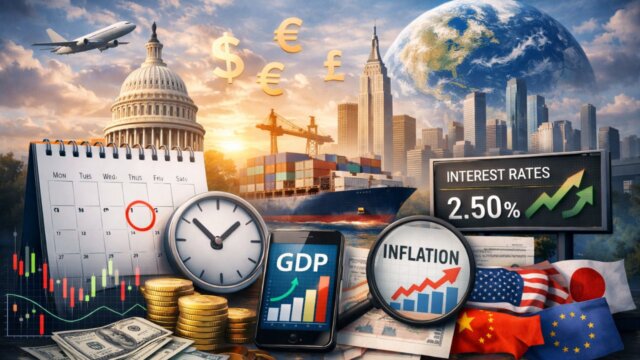
- Stay ahead of the markets with economic events this week that could impact stocks, interest rates, and currencies worldwide.
- Monday: December Retail Sales report will be released, indicating holiday spending trends.
- Wednesday: January Jobs Report provides insights on hiring and unemployment.
Financial markets are entering a period of heightened anticipation after The Kobeissi Letter highlighted a series of economic reports scheduled in the days ahead. Traders, analysts, and policymakers alike are tracking these developments closely, as economic events this week could influence interest-rate expectations, stock valuations, and currency movements. Even subtle surprises in the data may ripple across global markets, making this a particularly closely watched stretch on the economic calendar.
The week begins with the release of the December Retail Sales report on Monday. This dataset is widely regarded as a barometer of consumer confidence because it reflects how much households spent during the crucial holiday shopping season. Strong figures may signal resilient demand, while weaker-than-expected numbers could suggest that inflation or borrowing costs are beginning to restrain spending patterns across both physical stores and online platforms.
Attention then shifts to the labor market on Wednesday, when the January Jobs Report is scheduled for publication. Economists often view employment data as one of the clearest windows into overall economic health. Hiring trends, wage growth, and unemployment rates together form a snapshot of how businesses are responding to changing conditions. A robust report can reinforce confidence in growth, whereas softer numbers sometimes trigger concerns about slowing momentum.
Thursday brings a pair of indicators that deepen the picture. Initial Jobless Claims provide a near-real-time measure of layoffs, while January Existing Home Sales shed light on housing demand and affordability pressures. Both metrics can shape investor sentiment, especially when considered alongside other economic events this week, because they reveal how households and employers are navigating borrowing costs and broader financial conditions.
Inflation takes center stage on Friday with the release of the Consumer Price Index (CPI) for January. This report tracks price changes across a wide basket of everyday goods and services, from groceries to transportation. Because central banks closely monitor inflation trends, even a modest deviation from forecasts can influence expectations about future monetary policy decisions, including the timing of potential rate adjustments.
Beyond the scheduled data, several Federal Reserve officials are expected to deliver public remarks throughout the week. Market participants often parse these speeches carefully, searching for hints about how policymakers interpret recent economic signals. Tone, emphasis, and even small shifts in language can move markets, as investors attempt to anticipate the direction of interest rates and liquidity conditions in the months ahead.
Complicating the outlook further is renewed discussion about a possible government shutdown, an issue that has the potential to disrupt federal operations and dampen business confidence. Uncertainty of this kind can amplify market volatility, particularly when it coincides with major data releases. Taken together, the economic events this week form a dense cluster of signals that could shape expectations well beyond the immediate horizon.
Disclaimer: CryptopianNews shares this for learning and info only. It’s not meant to be financial or investment advice. Crypto markets change a lot and move quickly. Investing in them can be risky. You should always look into things yourself. Talk to a trained financial advisor before making any choices about investing.

- Bitcoin tightest session: Why Traders Are Watching $65K - July 20, 2026
- Can 5x Bitcoin Still Happen This Market Cycle? - July 18, 2026
- Capital Is Chasing AI: Why Bitcoin Is Waiting Its Turn - July 2, 2026