
Top Takeaways
Google has committed $3 billion to TeraWulf and strengthened the link between energy-heavy mining operations and AI compute growth.
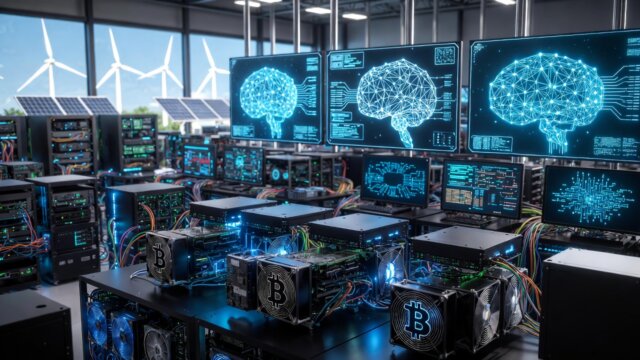
Mining facilities now support cloud-scale workloads as Bitcoin mining infrastructure converted to AI compute gains momentum.
Low-cost nuclear and hydro energy give TeraWulf an edge as demand for efficient AI processing accelerates.
The TeraWulf stock TWUL Google partnership 2026 narrative is gaining visibility across technology and digital asset markets.
Miners are emerging as key suppliers of compute capacity for hyperscale AI firms.
How Google Is Rewiring Bitcoin Mining for AI
The Google TeraWulf $3 billion AI data center investment deal highlights a shift in how hyperscalers expand capacity. Instead of building slow and expensive new data centers, Google is converting facilities already built to run thousands of mining servers. These sites offer ready access to land, electricity, and cooling systems. As AI demand increases sharply, companies need faster deployment options. Therefore, tapping existing mining facilities offers immediate advantages.
Traditionally, miners focused on maximizing hash production. However, the economics changed as AI workloads produced more sustainable returns. While mining revenue depends on token cycles, AI compute demand continues to set record highs. Consequently, TeraWulf is repositioning itself as a long-term infrastructure partner rather than a pure crypto operator.
TeraWulf Infrastructure and Energy Positioning
Repurposing Mines Into Compute Hubs
TeraWulf’s sites draw electricity from steady hydro and nuclear power sources. As a result, Google gains predictable pricing and continuous uptime. Since AI model training requires uninterrupted power, this alignment matters. Additionally, retrofitting mining racks into GPU clusters takes less time than greenfield construction. This speed gives Google a competitive advantage and keeps pace with rival cloud providers.
Moreover, miners possess hardened cooling systems built for extreme heat loads. That capability transfers naturally to modern AI clusters, which often run hotter than ASIC units.
Market Momentum and Strategic Alignment
Attention around TeraWulf stock TWUL Google partnership 2026 continues to build. Investors see miners as future compute landlords rather than niche players. Furthermore, miners already own the land, transformers, and utility hookups that traditional cloud suppliers lack. These assets take years to develop from scratch.
Although crypto markets still influence sentiment, AI adoption continues to accelerate. Because demand remains strong, mining companies that pivot early could secure durable revenue streams. Consequently, partnerships like Google and TeraWulf may mark the start of a broader wave of energy-backed infrastructure deals.
Read Also: Bernstein Crypto Regulation Warning Shakes U.S. Policy
Disclaimer!! The information provided by CryptopianNews is for educational and informational purposes only. It should not be considered financial or investment advice. Cryptocurrency markets are highly volatile and speculative, and investing in them carries inherent risks. Readers are advised to conduct their own research and consult with a qualified financial advisor before making any investment decisions.

- QuFi Post-Quantum Verification Platform: A New Infrastructure Layer for Digital Assets — A Post-Quantum Verification Platform for Digital Assets - September 4, 2026
- Polygon Leads as Visa Expands Stablecoin Network for Cross-Border Payments - April 29, 2026
- Michael Saylor Quantum Computing Bitcoin Threat: Is Bitcoin Ready? - April 24, 2026