
Key Points
- The European Parliament backed the ECB’s digital euro initiative to strengthen payment sovereignty.
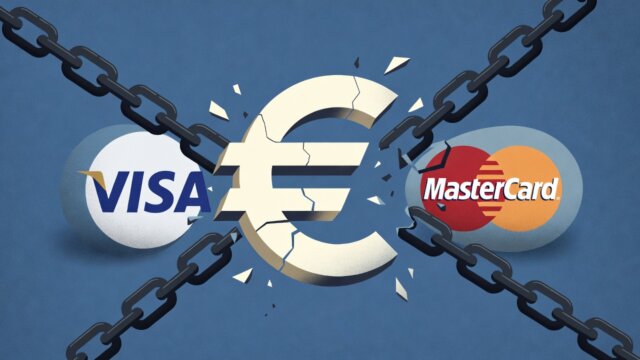
- Non-European providers process nearly 70% of euro area card payments.
- Visa and Mastercard dominate cross-border retail payments in Europe.
- The digital euro will support both online and offline transactions.
- Officials estimate a possible launch window around 2029.
Why Europe Needs Greater Payment Sovereignty
The debate over why europe needs digital euro payment system centers on sovereignty and control. Europe depends heavily on Visa and Mastercard for everyday digital transactions. According to ECB data, foreign card schemes process nearly 70% of euro area card payments. That level of reliance creates structural vulnerability within Europe’s financial system.
Moreover, payment infrastructure shapes economic power. When foreign networks dominate transactions, they influence pricing models, compliance standards, and technical rules. Europe cannot directly control those frameworks because private U.S. corporations operate them.
Recently, the European Parliament supported the ECB’s digital euro project. Lawmakers emphasized the importance of maintaining strategic autonomy in payments. They argued that Europe must strengthen its own infrastructure before global competition intensifies further.
As digital commerce expands, payment resilience becomes even more critical. Therefore, Europe seeks to reduce exposure to external disruptions. A publicly issued digital euro could serve as a secure, continent-wide payment rail.
Digital Euro vs Visa Mastercard Payment Networks
The comparison between digital euro vs visa mastercard payment networks highlights a structural divide. Visa and Mastercard operate as private, profit-driven intermediaries. In contrast, the digital euro would function as public money issued by the ECB.
Currently, merchants pay interchange and processing fees to international card schemes. Those fees vary by country and merchant size. Smaller businesses often pay higher effective rates. Consequently, cost disparities persist across the single market.
A digital euro could lower those costs. Because the ECB would oversee the infrastructure, policymakers could cap or regulate transaction fees. This approach would increase transparency and reduce dependency on foreign pricing models.
Additionally, card networks route payments through complex intermediary chains. Each intermediary adds cost and operational risk. However, a digital euro wallet could enable direct settlement in central bank money.
Furthermore, Visa and Mastercard rely on proprietary global networks. Europe does not control those systems. If geopolitical tensions rise, payment access could face indirect pressure. That risk concerns European policymakers.
By contrast, the digital euro would operate within European jurisdiction and is expected to experience massive growth. As a result, EU institutions would retain regulatory authority over standards and governance.
Reducing European Dependence on US Payment Systems
Reducing european dependence on us payment systems has become a strategic objective. Europe recognizes that financial autonomy strengthens economic resilience. Therefore, leaders increasingly frame payments as critical infrastructure.
U.S.-based providers dominate much of Europe’s cross-border card activity. While those systems function efficiently, they remain outside EU control. Consequently, Europe faces exposure to foreign regulatory shifts.
A digital euro could mitigate that exposure. It would allow consumers to transact directly using ECB-backed digital cash. That structure reduces reliance on private foreign intermediaries.
In addition, the ECB and EU Council have endorsed both online and offline functionality. Offline capability would allow payments without constant internet access. This feature improves resilience during network outages.
Moreover, the initiative supports integration across the euro area. Today, national payment schemes remain fragmented. A unified digital euro could standardize acceptance across member states.
Because Europe values strategic independence, policymakers view this shift as long-term insurance. They aim to secure autonomy before external pressures escalate further.
Legislative Progress and Economic Implications
Legislative momentum around the digital euro continues to build. The European Parliament recently backed the ECB’s proposal in a key vote. Lawmakers stressed that public digital money should complement, not replace, physical cash.
Officials project a potential launch around 2029, pending legal approval. Before that, authorities plan pilot testing and phased implementation. These steps aim to ensure operational security and privacy safeguards.
The economic implications extend beyond sovereignty alone. Merchants could benefit from lower transaction costs and faster settlement. Consumers could gain access to secure digital cash across all euro area countries.
Additionally, the digital euro could stimulate innovation in European fintech markets. Private firms could build services on top of a standardized public payment rail. That development may increase competition and reduce concentration risks.
Europe also seeks to protect data governance standards. Under a European system, EU law would regulate payment data storage and privacy. This approach aligns with existing digital protection frameworks.
Ultimately, the initiative reflects broader economic strategy. Europe aims to strengthen internal markets while reducing structural reliance on external payment giants. The digital euro represents one of the most significant steps toward that objective.
Read Also: BlackRocks Bitcoin ETP is Coming to Europe – What to Expect
Disclaimer!! CryptopianNews provides this information for educational and informational purposes only. You should not consider it financial or investment advice. Cryptocurrency markets are highly volatile and speculative, and they carry inherent risks. We advise readers to conduct their own research and to consult with a qualified financial advisor before making any investment decisions.

- BTC stuck in a range: Large Buyers Signal Strength - July 20, 2026
- CLARITY Act Odds Drop to 35% After DOJ Warning - July 18, 2026
- Strategy Updates Financial Policy for Bitcoin Holdings - July 2, 2026