

Important Bullet Points
- Top experts argue Bitcoin’s traditional four-year cycle is obsolete due to market evolution.
- Institutional capital flows are now a leading force reshaping long-term price dynamics.
- Regulatory clarity and Bitcoin ETFs are expanding adoption across global financial institutions.
- Institutional engagement supports a more stable, sustained price trajectory in 2026.
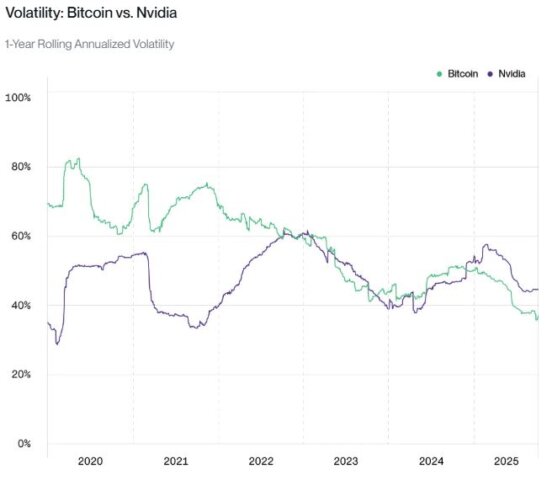
- Bitcoin volatility trends show a maturing asset class with reduced speculative swings.
How Bitcoin’s Market Cycle Is Shifting in 2026
Bitcoin’s price history was long defined by a roughly four-year cycle tied to the halving schedule and retail trader behavior, which produced boom-and-bust patterns. Analysts historically expected these cycles to repeat, creating peaks followed by deep corrections. However, industry leaders now argue this framework is fading in relevance.
The Four-Year Cycle: Why It’s Losing Influence
Traditionally, Bitcoin’s cycle was linked to halving events that cut miner rewards and created supply shocks. With each halving, the price impact lessened because adopters and market structure evolved. In Bitwise’s 2026 predictions memo, Chief Investment Officer Matt Hougan stated that the forces previously driving these cycles—including halvings, interest rate cycles, and leverage dynamics—are significantly weaker than in earlier years.
This assessment suggests that 2026 will not follow the expected post-peak downturn from the 2024 halving cycle. Instead, experts believe Bitcoin is entering a new regime where long-term adoption and structural factors outweigh legacy cycle rules.
Institutional Bitcoin Adoption 2026: A New Market Driver
Institutional interest in Bitcoin has grown markedly, and many analysts regard this trend as a foundational component of the evolving market. Since approval of spot Bitcoin exchange-traded funds (ETFs) beginning in 2024, corresponding products have expanded access for pension funds, wealth managers, and regulated financial institutions.
Why Institutional Flows Matter
Institutional participants typically allocate capital differently than retail traders. They tend to favor long-term positions, systematic rebalancing, and regulated investment vehicles. This behavior has several implications:
- Reduced speculative volatility as large holders prioritize stability over rapid trading.
- Steady demand from financial platforms integrating Bitcoin into strategic portfolios.
- Diversification benefits that attract capital from traditional asset classes.
These shifts are part of the broader institutional bitcoin adoption 2026 narrative, where mainstream finance increasingly views BTC as a legitimate store of value and portfolio asset. Such adoption supports more measured price trends that could carry Bitcoin higher in 2026.
Macro Environment and Regulatory Progress
Beyond institutional adoption, several macroeconomic factors bolster Bitcoin’s outlook in 2026.
Interest Rates and Regulatory Clarity
Investors anticipate lower interest rates in 2026 compared to previous tightening cycles, potentially increasing risk asset allocation. Bitwise notes that falling rates may encourage capital flies back into risk assets, including Bitcoin, as investors seek yield and growth outside traditional fixed-income markets.
At the same time, regulatory structures in the U.S. and other major markets have become more defined after years of uncertainty. What was once a deterrent for institutional capital is now seen as a foundation for safe participation. This clarity encourages larger, more sophisticated investors to allocate funds over longer horizons.
What This Means for Bitcoin Prices
With traditional cycle expectations fading, experts now focus on new frameworks for bitcoin all time high 2026 prediction scenarios. While forecasts vary widely, key themes emerge from current research and market sentiment:
- Sustained growth patterns instead of dramatic peaks and troughs.
- Potential new records higher than the 2025 all-time high, influenced by demand from institutional flows.
- Reduced volatility profiles that may attract a broader investor base.
Importantly, analysts caution that markets remain unpredictable, and macroeconomic headwinds—such as inflation, geopolitical instability, or unexpected regulatory shifts—could alter trajectories. Yet the structural evolution underpinning this cycle strengthens the case for a more durable Bitcoin market in 2026.
Adjusting Your Bitcoin Investment Strategy 2026
Given the shifting dynamics, both retail and institutional investors are reconsidering traditional approaches. Here are several strategic considerations emerging from current market insights:
Diversification and Long-Term Positioning
With institutional participation anchoring price performance, long-term holds may become more viable, especially where regulatory frameworks support custodial safety and compliance. Even as volatility decreases, risk management remains essential. Investors should balance exposure with broader portfolio objectives, incorporating hedging strategies or staged allocations. Interest rate shifts, regulatory developments, and ETF inflows will play a central role in price direction. Staying informed on these macro signals helps refine entry and exit points.
Read Also: Bitcoin RSI Oversold: What History Tells Us About BTC Price Recovery in 2025
Disclaimer!! The information provided by CryptopianNews is for educational and informational purposes only. It should not be considered financial or investment advice. Cryptocurrency markets are highly volatile and speculative, and investing in them carries inherent risks. Readers are advised to conduct their own research and consult with a qualified financial advisor before making any investment decisions.

- QuFi Post-Quantum Verification Platform: A New Infrastructure Layer for Digital Assets — A Post-Quantum Verification Platform for Digital Assets - September 4, 2026
- Polygon Leads as Visa Expands Stablecoin Network for Cross-Border Payments - April 29, 2026
- Michael Saylor Quantum Computing Bitcoin Threat: Is Bitcoin Ready? - April 24, 2026