

Traditional payment systems like Visa and Mastercard are now facing formidable competition from blockchain-powered alternatives. In particular, stablecoins have emerged as a powerful contender. This article explores how stablecoins are beating Visa and Mastercard in global payments, reshaping the future of money movement.
What Are Stablecoins and Why Are They Gaining Ground?
Stablecoins are digital assets pegged to the value of fiat currencies like the U.S. dollar. They combine the stability of traditional currencies with the efficiency of blockchain technology. Their appeal lies in their low volatility, instant transfer speed, and transparency. These features make them an attractive option for global transactions.
While Visa and Mastercard have built vast infrastructures, they still rely on legacy systems. These systems are slow, costly, and often inaccessible to millions. Stablecoins, by contrast, operate 24/7 and are borderless by design. In the debate of stablecoins vs traditional payment systems, speed and accessibility make a clear difference.
The Numbers Behind the Shift
In 2024 alone, stablecoins processed over $28 trillion in transaction volume. That figure surpasses the total handled by Visa and Mastercard combined. With this explosive growth, stablecoins are doing more than disrupting—they’re dominating. Businesses and consumers alike are turning to them for efficiency, cost savings, and speed.
Blockchain-based payment rails settle in minutes rather than days. There are fewer intermediaries, which lowers fees dramatically. These benefits make stablecoins more efficient, particularly for cross-border payments. They’re especially popular in developing countries, where traditional banking access is limited.
Blockchain Replacing Credit Card Networks
One of the most transformative trends in fintech today is blockchain replacing credit card networks. With blockchain, payments are transparent, secure, and irreversible. Fraud risks are reduced, and user control is increased. Traditional card networks, on the other hand, are susceptible to chargebacks and higher fraud incidents.
Smart contracts can automate payment flows and enforce terms without human intervention. This innovation further reduces processing costs. When comparing the two systems, it’s clear that blockchain offers a more streamlined experience. As a result, many fintech firms are integrating blockchain into their payment architecture.
Regulatory Tailwinds and Institutional Support
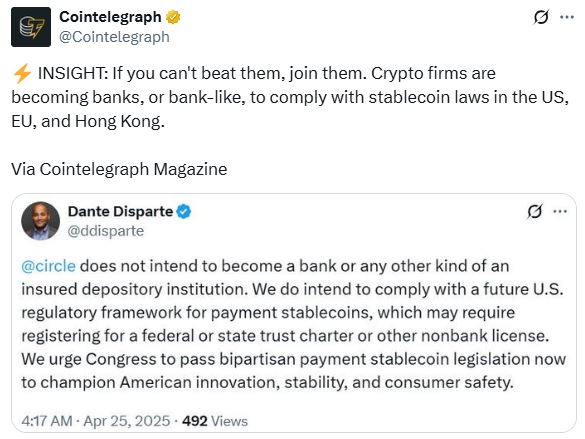
Governments and regulatory bodies are beginning to take stablecoins seriously. In 2025, the U.S. Senate introduced the GENIUS Act to create a regulatory framework for payment stablecoins. This step signals growing institutional acceptance and lays the groundwork for safer adoption.
Big financial players are entering the scene too. PayPal, Visa, and even Mastercard have announced stablecoin pilot programs. These moves show that the trend is irreversible. Traditional firms realize that to stay relevant, they must adapt or risk being left behind.
Real-World Use Cases and Applications
Merchants are increasingly accepting stablecoins due to lower transaction fees. Consumers enjoy instant payments without the usual card processing delays. In high-inflation economies, stablecoins provide a stable store of value. For freelancers and gig workers, they offer fast, borderless payouts without bank dependencies.
Remittances have also seen a stablecoin-fueled revolution. Sending money across borders is faster and more affordable. This democratization of payments highlights how stablecoins are beating Visa and Mastercard, especially in areas where financial services are lacking.
Challenges and Limitations
Despite their promise, stablecoins are not without challenges. Regulatory uncertainty remains a significant barrier. Additionally, technical knowledge is still required for mainstream adoption. Issues like smart contract bugs and wallet security also pose risks.
Yet, the industry continues to mature. Developers are working on user-friendly wallets, improved scalability, and regulatory compliance tools. As solutions emerge, the gap between stablecoins and traditional systems will only widen.
What This Means for the Future
The global payments landscape is at a turning point. Stablecoins are evolving from speculative assets into practical payment tools. In the stablecoins vs traditional payment systems debate, the momentum is clearly shifting. Blockchain replacing credit card networks is no longer a distant prediction—it’s becoming reality.
Financial institutions, businesses, and consumers must prepare for this transformation. Embracing blockchain and stablecoin integration will be essential for staying competitive. The days of high fees, long settlement times, and opaque transactions may soon be behind us.
Read Also: Strategy’s $764.9M Bitcoin Investment: Implications for the Crypto Market
Disclaimer!! The information provided by CryptopianNews is for educational and informational purposes only. It should not be considered financial or investment advice. Cryptocurrency markets are highly volatile and speculative, and investing in them carries inherent risks. Readers are advised to conduct their own research and consult with a qualified financial advisor before making any investment decisions.
:

- QuFi Post-Quantum Verification Platform: A New Infrastructure Layer for Digital Assets — A Post-Quantum Verification Platform for Digital Assets - September 4, 2026
- Polygon Leads as Visa Expands Stablecoin Network for Cross-Border Payments - April 29, 2026
- Michael Saylor Quantum Computing Bitcoin Threat: Is Bitcoin Ready? - April 24, 2026