
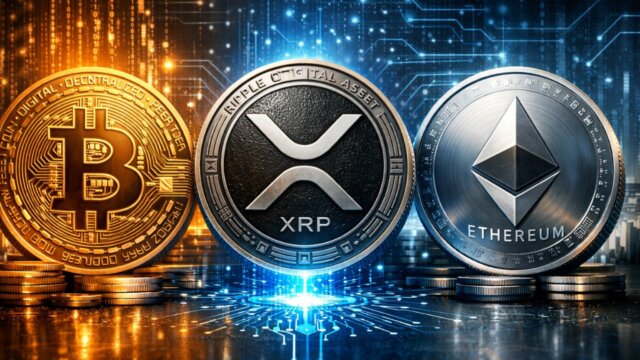
- In this JoelKatz XRP breakdown, discover how XRP bridges Bitcoin and Ethereum and why Ripple’s early infrastructure still matters today.
- Ripple reportedly built key blockchain tools like a DEX and stablecoin framework years before the industry recognized their importance.
- However, according to Ripple’s former CTO, the technology still needs refinement before full global adoption happens.
Cryptocurrency continues to evolve, yet the debate about which blockchain architecture works best is far from settled. Recently, the crypto community paid close attention when JoelKatz XRP insights surfaced during XRP Australia 2026. His comments sparked discussion because they highlighted how the XRP Ledger was intentionally designed to balance the strengths of other major blockchains. While Bitcoin focuses on doing one job extremely well and Ethereum tries to support nearly everything, the XRP Ledger aims to sit somewhere in the middle. That positioning, according to Ripple’s leadership, may make it more practical for real-world financial systems. Moreover, his remarks revealed something surprising: Ripple may have built several blockchain tools long before the industry realized they would become essential. As a result, many analysts are now re-examining XRP’s long-term role in the crypto ecosystem.
JoelKatz XRP Explains Why XRPL Sits Between Bitcoin and Ethereum
During the event, Ripple’s former CTO explained how different blockchain networks prioritize different goals. Bitcoin focuses heavily on security and simplicity. Because of that design choice, it performs extremely well as a store of value but does not offer many built-in financial tools. Ethereum, on the other hand, attempts to support a wide range of decentralized applications. Smart contracts allow developers to build almost anything on the network. However, this flexibility often comes with trade-offs such as high transaction fees and scalability challenges. The XRP Ledger was built with a different philosophy. Instead of specializing in just one function or trying to support unlimited possibilities, it aims to balance efficiency, speed, and financial utility. Consequently, XRPL can handle fast transactions while still supporting features needed by financial institutions. According to Ripple leadership, this middle-ground design fills an important gap in the crypto market. Financial systems require speed, reliability, and predictable costs. Therefore, a network optimized specifically for payments and liquidity could serve banks, payment providers, and cross-border platforms more effectively than many alternatives.
Ripple’s Early Innovation: Building Tools Before the Market Needed Them
Another surprising revelation involved Ripple’s early development strategy. Long before decentralized exchanges became popular, Ripple engineers reportedly built one directly into the XRP Ledger. At the time, many people did not even understand the potential of decentralized trading systems. Nevertheless, Ripple focused on creating infrastructure that would allow assets to be exchanged directly on-chain. This decision now looks forward-thinking, especially as decentralized finance has grown into a major sector. Additionally, Ripple worked on stablecoin concepts before the broader crypto industry fully understood their importance. Today, stablecoins play a critical role in trading, remittances, and DeFi platforms. Yet years ago, very few blockchain projects were thinking about how digital assets could maintain stable value. Because of these early developments, the XRP Ledger now includes built-in features that many newer blockchains still struggle to implement efficiently. Furthermore, these tools were designed with financial use cases in mind, which could give XRPL an advantage when traditional institutions explore blockchain technology.
The Path Toward Mass Adoption Still Requires Progress
Despite these innovations, Ripple leadership acknowledged that the crypto industry still faces technical challenges. Blockchain systems continue to improve, but they are not yet fully polished for global financial infrastructure. For example, regulatory clarity remains inconsistent across many countries. Financial institutions typically require clear legal frameworks before adopting new technologies. Without this certainty, adoption often moves slower than expected. At the same time, scalability and interoperability still need refinement across the broader blockchain ecosystem. Although transaction speeds have improved significantly, global payment networks must process massive volumes reliably every day. However, progress continues steadily. Developers are improving protocols, regulators are gradually introducing clearer policies, and financial institutions are experimenting with blockchain-based solutions. Consequently, the foundation for large-scale adoption is forming, even if the final stage has not yet arrived.
Conclusion
The discussion around blockchain specialization versus versatility remains central to the crypto industry. Insights shared during XRP Australia 2026 suggest that the XRP Ledger was intentionally built to balance the strengths of major networks like Bitcoin and Ethereum. Ripple’s early work on decentralized exchanges and stablecoin infrastructure shows how the company tried to anticipate future needs before they became obvious to the market. Although challenges remain before blockchain technology reaches full global adoption, these early design decisions could become increasingly important. Ultimately, the perspective shared by JoelKatz XRP highlights why XRPL continues to attract attention as a potential bridge between traditional finance and the evolving world of digital assets.
Disclaimer: CryptopianNews shares this for learning and info only. It’s not meant to be financial or investment advice. Crypto markets change a lot and move quickly. Investing in them can be risky. You should always look into things yourself. Talk to a trained financial advisor before making any choices about investing.

- Bitcoin tightest session: Why Traders Are Watching $65K - July 20, 2026
- Can 5x Bitcoin Still Happen This Market Cycle? - July 18, 2026
- Capital Is Chasing AI: Why Bitcoin Is Waiting Its Turn - July 2, 2026