

- RWA initially dominated DeFi with dollar-pegged tokens like USDT and USDC.
- Tokenized Treasuries entered the market, offering low-risk, yield-generating instruments on-chain.
- The success of tokenized Treasuries proved that tokenization works, converting safe, yield-bearing securities into blockchain-native assets.
- Private credit has taken this model further, deploying capital into lending markets where yields climb from 10% to 16%.
The world of Decentralized Finance (DeFi) is undergoing a massive transformation in 2025, shifting from the safety of tokenized U.S. Treasuries toward riskier yet more rewarding opportunities in Private Credit and other high-yield asset classes. This year marks a turning point for Real World Assets (RWA), as crypto investors move beyond experimental phases into large-scale adoption, reshaping how money flows across global markets. With billions of dollars already tokenized and deployed on-chain, RWAs are no longer just a concept—they have become the backbone of DeFi’s real yield economy. From Treasuries to structured credit, investors are climbing the yield curve, balancing safety with returns, and redefining the relationship between traditional finance (TradFi) and blockchain ecosystems.
From Stablecoins to Structured Assets
When RWAs first emerged in crypto conversations, most people thought of stablecoins. Dollar-pegged tokens like USDT and USDC dominated DeFi, providing the liquidity rails for lending, borrowing, and trading. Later, tokenized Treasuries entered the market, offering low-risk, yield-generating instruments on-chain. But in 2025, the picture has changed dramatically. According to the Dune x RWA 2025 report, tokenized assets have soared to USD 30.26 billion, showcasing the speed at which real-world finance is merging with blockchain.
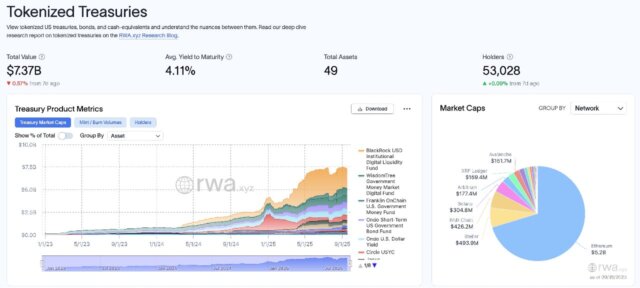
- U.S. Treasuries represent around USD 7.3 billion, growing as investors sought safe and liquid instruments during 2023–2024. Major players like BlackRock’s BUIDL and Franklin Templeton’s BENJI funds led adoption.
- Private Credit, however, has surged to USD 15.9 billion, overtaking Treasuries. Protocols like Maple Finance and Centrifuge have pioneered tokenized lending pools, bridging off-chain borrowers with on-chain investors.
This shift demonstrates that investors are moving past experimentation and into risk-adjusted strategies, mirroring traditional capital market behaviors but on decentralized rails.
Tokenization in Practice
The success of tokenized Treasuries proved one thing—tokenization works. By converting safe, yield-bearing securities into blockchain-native assets, DeFi demonstrated that it could compete with traditional investment platforms. Now, private credit has taken that model further. Instead of passively holding government bonds, investors are deploying capital into lending markets where yields climb from 10% to 16%. While this carries higher risk, it also provides diversification and access to opportunities once reserved for banks and institutional funds. RWAs are no longer static, symbolic assets. They are:
- Collateral on lending protocols like Aave.
- Liquidity providers in Automated Market Makers (AMMs).
- Components of structured vaults offering customized yield strategies.
As Chris Yin, CEO and Co-Founder of Plume Network, explains: “RWA adoption is moving past vanity TVL numbers held in just a few wallets. The real progress comes from active users who hold and use assets on-chain. This makes them liquid, composable, and part of DeFi.” This statement highlights a key point—RWAs are evolving from locked-up investments to functional financial instruments within DeFi ecosystems.
Climbing the Yield Curve
Perhaps the most fascinating aspect of 2025’s RWA landscape is how capital is climbing the yield curve, moving step by step from safety toward risk.
Stage 1: Treasuries
- Investors begin with tokenized U.S. Treasuries.
- Returns: 4–5% annual yield.
- Benefits: High trust, easy liquidity, low risk.
- Purpose: A safe entry point for traditional investors exploring blockchain.
Stage 2: Private Credit
- Next, capital flows into tokenized private lending pools.
- Returns: 10–16% yields.
- Risks: Defaults, counterparty exposure, regulatory oversight.
- Platforms: Maple Finance, Centrifuge, and Goldfinch.
Stage 3: Structured Credit & Equities
- The emerging frontier of tokenization.
- Includes Collateralized Loan Obligations (CLOs), repo vaults, and tokenized equities.
- Returns: Higher yield potential but complex legal, regulatory, and liquidity risks.
- Significance: The beginning of full-scale integration of TradFi into DeFi.
As Jürgen Blumberg, COO of Centrifuge, puts it: “We started with Treasuries as the safe haven. Then came CLOs, which gave higher yield with reasonable risk. Talking to investors, one thing is clear: they want higher yield from real-world asset products, and we are responding.” This structured progression reflects a natural investor psychology—start safe, test the waters, then chase higher yields once confidence builds.
The Rise of Private Credit
Private credit is not new in traditional markets. For years, hedge funds, private equity firms, and institutional lenders dominated this space. What’s new is that DeFi has opened private credit to a wider pool of investors, allowing retail and global participants to access high-yield lending opportunities once locked behind exclusive doors. The appeal of private credit lies in:
- Higher Yields: Compared to Treasuries, yields can be double or triple.
- Diversification: Exposure to borrowers outside traditional securities markets.
- DeFi Infrastructure: Blockchain enables transparency, instant settlement, and composability.
However, risks remain real. Borrower defaults, illiquidity, and regulatory uncertainty could slow growth. Some pools may lack sufficient redemption mechanisms, leaving investors stuck during crises. Yet, despite these risks, private credit’s USD 15.9 billion tokenization milestone proves that investors are ready to embrace it.
Opportunities Ahead
RWAs represent more than just yield—they are the bridge between crypto and global finance. Tokenization is unlocking access to trillions in traditional markets, providing:
- Institutional Onboarding: Big asset managers like BlackRock are proving tokenization is scalable.
- Global Capital Flows: Cross-border lending without intermediaries.
- Real Yield Products: Moving beyond speculative tokens into tangible, revenue-generating assets.
For DeFi, RWAs offer legitimacy and resilience. By anchoring protocols in real-world revenue streams, they reduce reliance on hype cycles and create sustainable ecosystems. This convergence could eventually lead to on-chain mutual funds, pension products, and ETFs, making blockchain the natural settlement layer for all finance.
Risks That Cannot Be Ignored
While opportunities are abundant, risks are equally pressing:
- Liquidity Challenges – Not all RWA tokens can be instantly redeemed, creating mismatches in times of stress.
- Legal Complexity – Jurisdictions differ in how they treat tokenized securities, adding legal and compliance hurdles.
- Counterparty Risk – Borrower defaults and mismanagement of lending pools remain significant threats.
- Regulatory Intervention – Governments may impose restrictions on tokenized credit markets, especially if retail exposure grows.
As RWAs scale, protocols must establish robust governance, transparency, and redemption mechanisms to build lasting trust.
RWAs as the Backbone of DeFi in 2025
In 2025, Real World Assets are no longer side experiments—they are central to DeFi’s future. What began with tokenized Treasuries as a safe entry point has now expanded into Private Credit, structured loans, and tokenized equities, marking a new era of capital flows on-chain. The movement from safety toward risk reflects the maturity of crypto markets. Investors are no longer satisfied with just stablecoins or staking—they demand real yield backed by tangible assets. RWAs provide exactly that, bridging the gap between TradFi and DeFi while opening opportunities for both institutional and retail investors. Yes, risks remain—liquidity constraints, legal uncertainties, and borrower defaults. But with billions already locked in, and institutional giants leading the way, the RWA revolution is here to stay. The climb up the yield curve does not stop with Treasury bills. The next chapters will be written in structured credit, equities, and beyond, reshaping the financial landscape forever.
Disclaimer: CryptopianNews shares this for learning and info only. It’s not meant to be financial or investment advice. Crypto markets change a lot and move quickly. Investing in them can be risky. You should always look into things yourself. Talk to a trained financial advisor before making any choices about investing.

- Bitcoin tightest session: Why Traders Are Watching $65K - July 20, 2026
- Can 5x Bitcoin Still Happen This Market Cycle? - July 18, 2026
- Capital Is Chasing AI: Why Bitcoin Is Waiting Its Turn - July 2, 2026