
Key Takeaways
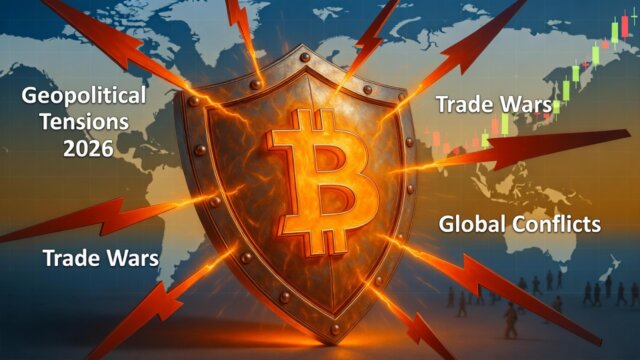
- Bitcoin has shown durability amid 2026 geopolitical conflict, maintaining price ranges with deeper institutional interest.
- Crypto market resilience vs traditional stocks is evident as equities falter and crypto ETFs gain inflows.
- Digital assets performance during geopolitical instability is contrasted with oil surges and stock sell-offs.
- Institutional players are reallocating capital into crypto and ETFs, even during war-related uncertainty.
- Bitcoin price action has been steady, suggesting evolving behavior vs past panic-driven selloffs.
Bitcoin’s Price Behavior Amid 2026 Geopolitical Conflicts
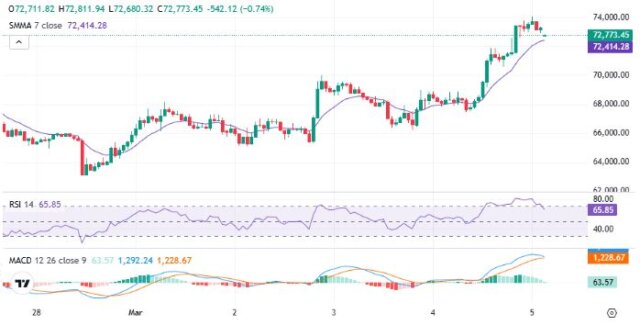
Rising tensions in the Middle East triggered significant volatility across global financial markets. Traditional stocks retreated sharply, borne out of fears over oil supply disruptions and elevated inflation expectations. At the same time, Bitcoin demonstrated unexpected price resilience. Unlike previous selloffs during global stress, BTC consistently maintained its trading range near $67,000–$74,000.
This behavior supports a wider debate: whether Bitcoin as a safe haven asset during war represents a paradigm shift in how global markets treat crypto during macro uncertainty. Historically, assets like gold, U.S. Treasuries, and the dollar were the primary hedges. In contrast, Bitcoin’s trading range reveals muted panic selling and demonstrates steady investor confidence.
Crypto Market Resilience vs Traditional Stocks
The recent crypto market resilience vs traditional stocks trend is striking. While equities — particularly tech indices — saw notable losses on the back of geopolitical risk, crypto markets exhibited a mixed but generally stronger performance. Inflows into Bitcoin ETFs reached multi-hundreds of millions over consecutive days, hinting at a rotation of capital into digital assets seen as potential hedges in unstable times.
Institutional interest has played a crucial role. Financial vehicles such as ETF products helped absorb price volatility and offered a regulated method for investors to gain exposure to Bitcoin without direct spot trading. This dynamic contributed to a more stabilized market reaction than seen in the stock market, where risk-off behavior typically triggers deeper selloffs.
Meanwhile, energy commodities like oil surged sharply as conflict impacted key maritime transit routes, driving traditional markets toward uncertainty. Even in this environment, crypto markets did not collapse — a contrast that underlines how digital assets can diverge from conventional risk patterns.
Digital Assets Performance During Geopolitical Instability
The concept of digital assets performance during geopolitical instability is evolving rapidly. Bitcoin, Ethereum, and other large tokens have weathered this wave of macro stress with varied outcomes. Bitcoin’s sustained range above key support levels — despite episodic dips — highlights a maturity in market structure and investor strategy.
It’s important to note that while BTC did not surge uncontrollably, it avoided deep capitulation commonly associated with marked risk-off environments. This steadiness, combined with institutional liquidity, underscores changing market behavior. More traders are treating crypto not purely as high-beta risk positions but also as components of diversified portfolios during conflict.
However, crypto markets are not entirely decoupled from macro pressures. Derivative market reactions and short-term trader behaviors reveal that panic orders still influence price action. Yet, the digital assets performance during geopolitical instability shows a relative stabilization compared to many equities and commodities under stress.
Read Also: Bitcoin vs Equities Performance Amid Iran Crisis
Disclaimer!! CryptopianNews provides this information for educational and informational purposes only. You should not consider it financial or investment advice. Cryptocurrency markets are highly volatile and speculative, and they carry inherent risks. We advise readers to conduct their own research and to consult with a qualified financial advisor before making any investment decisions.

- QuFi Post-Quantum Verification Platform: A New Infrastructure Layer for Digital Assets — A Post-Quantum Verification Platform for Digital Assets - September 4, 2026
- Polygon Leads as Visa Expands Stablecoin Network for Cross-Border Payments - April 29, 2026
- Michael Saylor Quantum Computing Bitcoin Threat: Is Bitcoin Ready? - April 24, 2026