
Choose a section or paragraph
Web3 Is Moving Beyond Tokens and Trading
For years, much of the Web3 industry has focused on cryptocurrencies, decentralized finance, NFTs and blockchain-based financial products. These sectors helped introduce blockchain technology to millions of people.
But another part of Web3 is starting to receive more attention: digital identity.
The idea is simple. People should be able to prove certain things about themselves online without depending on a different account or verification process for every platform.
A user might want to prove that they are a real person, have completed a course, own a particular digital asset or meet the requirements for using a financial service. Today, this information is often stored across separate websites, applications and databases.
Web3 developers are exploring whether blockchain-based identity systems can make these credentials easier to manage and verify.
This is not just a technical discussion. Digital identity could become an important part of the next stage of Web3 adoption, especially for businesses that need reliable user verification, reputation systems and secure digital services.
Why Digital Identity Is Becoming Important for Web3
The internet has a long-standing identity problem.
Most online services require users to create separate accounts. Each platform collects its own information and decides how users should be verified.
This creates several difficulties.
Users have limited control over information stored by different companies. Businesses may need to repeat identity checks, even when a customer has already completed a similar process elsewhere. Fake accounts and automated bots can also damage online communities.
Web3 identity projects are trying to address some of these problems.
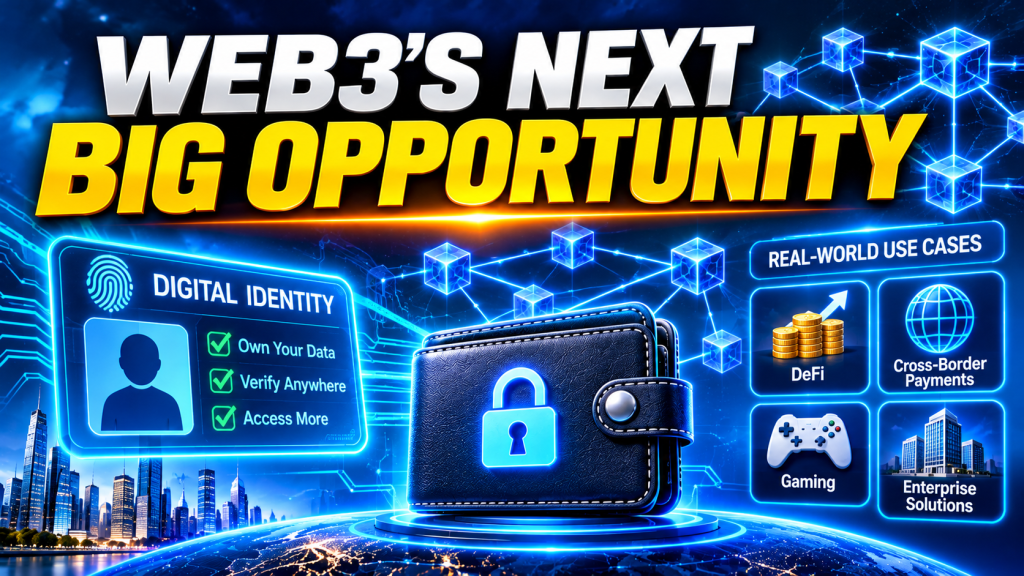
A decentralized identity system can allow users to manage digital credentials through a wallet or another identity application. Depending on the system, users may be able to share selected information with a service without exposing every detail about themselves.
For example, a person may need to prove that they are over a certain age. Instead of sharing a full identity document with every platform, a suitable credential system could confirm the required information without revealing unrelated personal details.
This is one of the main reasons digital identity is attracting attention from developers and businesses.
However, blockchain does not automatically make an identity system private or secure. Poorly designed systems can still expose personal information, and users can lose access to credentials if recovery arrangements are weak.
The quality of implementation will matter more than the technology label.
Moca Network and OKX Ventures Bring Fresh Attention to the Sector
One recent development came from Animoca Brands.
In November 2026, Animoca Brands announced a partnership between Moca Network, its decentralized identity network, and OKX Ventures.
The partnership aims to identify and support projects building applications within the Moca ecosystem. The companies have highlighted practical use cases, institutional-grade infrastructure and support for developers.
This is an important development because it connects a digital identity project with a major blockchain investment ecosystem.
The partnership does not mean that decentralized identity has already achieved mass adoption. It does, however, show that established Web3 companies are paying attention to the infrastructure needed for identity-based applications.
The next challenge will be turning this interest into products that people and businesses actually use.
A successful identity platform needs more than a blockchain integration. It must offer a clear benefit, simple user experience, strong privacy protections and reliable verification.
If users find the system difficult to operate, they may continue using traditional accounts. Businesses will also hesitate if the technology adds complexity without reducing costs or improving security.
How Decentralized Identity Could Work
Decentralized identity gives users a different way to manage information about themselves.
Instead of depending entirely on a central platform, a user may hold digital credentials issued by trusted organizations. These credentials can then be presented to other services when required.
For example, a university could issue a digital certificate to a graduate. The graduate could store the credential in a compatible wallet and later present it to an employer.
The employer would not necessarily need to contact the university through a manual process every time. A verification system could check whether the credential was issued by the recognized institution and whether it remains valid.
The blockchain may be used to support parts of the verification process, record relevant information or help different applications recognize trusted credentials.
Importantly, sensitive personal information does not need to be published directly on a public blockchain. In fact, storing private identity data on a public and permanent ledger can create serious privacy problems.
A well-designed system should keep sensitive information offchain or use privacy-preserving methods. The blockchain can help verify the authenticity of credentials without becoming a public database of personal records.
Five Web3 Areas That Could Benefit From Digital Identity
The commercial opportunity is not limited to one industry. Several sectors could benefit if decentralized identity becomes easier to use.
1. Decentralized Finance
Decentralized finance has made financial services available through blockchain applications, but it still faces challenges around compliance and user verification.
Some financial services must identify customers before providing access. A reusable digital credential could help users complete certain verification steps without starting from the beginning every time.
For example, an approved provider could issue a credential after completing a required identity check. A compatible financial application could then verify the credential, subject to the rules that apply to that service.
This could reduce repeated administrative work.
However, a digital credential does not remove regulatory obligations. Financial companies still need to meet applicable customer identification, anti-money-laundering and data protection requirements.
The opportunity is to make compliant processes more efficient, not to avoid them.
2. Gaming and Digital Communities
Gaming is another sector where identity and reputation can become valuable.
Players build histories across different games and online communities. They may earn achievements, hold digital assets or develop reputations through their activity.
A portable identity system could allow certain achievements or credentials to be recognized across compatible applications.
For example, a gaming platform could verify that a player has completed a tournament or earned a specific achievement. A partner application could then use that information when offering access to an event or community.
This could help developers create stronger connections between games and online communities.
There are still important questions. Players may not want every part of their gaming history connected to one permanent identity. Privacy settings and user control will therefore be important.
3. Education and Professional Credentials
Education is one of the clearest use cases for digital credentials.
Universities, training providers and professional organizations issue certificates that people need to present to employers and other institutions.
Traditional verification can involve emails, paper documents and administrative checks.
Digital credentials could make this process faster. An institution could issue a verifiable certificate that the recipient stores and presents when required.
Employers could then check whether the credential is authentic without relying entirely on documents that might be altered.
This does not mean every educational institution will move to blockchain. Existing digital certificate systems already serve many organizations. Web3 solutions will need to demonstrate clear advantages before institutions change their processes.
4. Social Platforms and Online Reputation
Fake accounts, spam and automated activity remain problems for online communities.
Some Web3 projects are exploring reputation systems that connect user activity with verifiable credentials.
A platform could use credentials to recognize trusted community members, contributors or event participants. Users might be able to carry selected reputation information between compatible applications.
This could improve community management and reduce some forms of abuse.
But reputation systems also create risks. A permanent record of user activity could limit people’s ability to start again or participate anonymously.
Developers should avoid creating systems that turn every online action into a permanent public score.
5. Real-World Services and Digital Access
Digital identity could also connect Web3 with services outside the crypto industry.
Businesses may need to verify membership, qualifications, age or eligibility before providing access to certain products.
A reusable credential could make some of these checks easier.
For example, an event organizer could verify a ticket holder’s eligibility through a digital credential. A professional association could issue a membership credential that can be checked by partner organizations.
These examples show why digital identity may attract interest beyond cryptocurrency trading.
The strongest commercial opportunities may come from businesses that need secure verification rather than from speculative token markets.
Privacy Will Decide Whether Users Trust Web3 Identity
Digital identity projects face a major challenge: people do not want to lose control of their personal information.
A system that makes verification easier but exposes private data will struggle to gain trust.
Developers need to consider several issues.
First, users should understand what information they are sharing and why. Consent should be clear rather than hidden inside complicated terms.
Second, credentials should not reveal more information than necessary. If a service only needs to confirm one fact, it should not receive unrelated personal details.
Third, users need reliable ways to recover access if they lose a device or wallet. Losing an identity wallet should not automatically mean losing access to important credentials.
Finally, systems need clear rules for revoking credentials. A certificate may expire, a membership may end or an issuing organization may need to correct an error.
These are practical challenges, not minor technical details. They will influence whether companies trust decentralized identity systems.
Ethereum’s Roadmap Could Support the Wider Web3 Infrastructure Market
Digital identity does not depend on one blockchain. Different projects may build on different networks or use technology that works across several ecosystems.
Ethereum remains one of the important networks to watch because of its large developer community and infrastructure.
The Ethereum Foundation’s roadmap identifies Glamsterdam as a major planned upgrade following Fusaka. The proposed work includes improvements related to transaction processing, block construction and network efficiency.
The upgrade is part of a broader effort to support a network that can handle more activity. However, official updates available in November 2026 indicated that the Hoodi testnet activation had been postponed, with a new date still to be announced. A mainnet date had also not been confirmed.
This distinction matters. Planned improvements should not be reported as completed features.
For Web3 identity developers, improvements in network capacity and infrastructure may help support applications that require frequent verification or interaction. But identity systems will still need their own privacy, security and usability solutions.
Why Web3 Companies May Find Commercial Opportunities Here
Digital identity could create opportunities for several types of Web3 businesses.
Infrastructure developers can build identity protocols, credential systems and verification tools.
Wallet providers can offer ways to store and manage credentials.
Security companies can provide audits, identity protection and recovery solutions.
Application developers can integrate verification into financial services, gaming platforms and online communities.
Enterprise technology companies can help traditional businesses connect existing systems with decentralized identity infrastructure.
This creates a broad commercial market. It also gives crypto media companies a different group of potential partners to approach.
Projects working on identity verification, privacy tools, credential infrastructure and enterprise blockchain applications may be interested in explaining their products to a Web3 audience.
For media platforms, the strongest editorial approach is to examine what a project actually does, who uses it and what problem it solves. Articles that only repeat partnership announcements are less useful to readers.
What Could Stop Decentralized Identity From Growing?
The technology has potential, but there are several obstacles.
Poor user experience: Most people do not want to manage complicated wallets or understand blockchain transactions just to verify an account.
Fragmented standards: If identity systems cannot communicate with each other, users may end up with the same disconnected accounts they already have.
Privacy concerns: Users may reject systems that collect too much information or make personal activity easy to track.
Regulatory uncertainty: Businesses need to understand how digital credentials fit within existing identity, privacy and financial regulations.
Security risks: Wallet theft, compromised devices and weak recovery systems could expose credentials or lock users out of important services.
Limited adoption: A credential is only useful when the organizations that issue it and the services that accept it are part of a working ecosystem.
These challenges explain why the sector needs more than investment announcements. It needs products that solve real problems.
What Should Investors and Web3 Builders Watch Next?
The next stage of digital identity will be measured by adoption rather than announcements.
Investors and developers should watch for partnerships that lead to working applications. They should also examine whether projects have independent security reviews, clear privacy policies and reliable credential recovery systems.
Another important signal will be the number of organizations willing to issue and accept credentials.
A project may have strong technology, but it will struggle to grow if universities, financial services, businesses and application developers do not use it.
The Moca Network and OKX Ventures partnership is one development worth following. Its long-term importance will depend on the projects supported and the applications that emerge from the ecosystem.
Final Thoughts
Web3 is entering a stage where infrastructure may become more important than another token launch.
Decentralized identity could help people manage digital credentials, prove information and use online services with greater control over their data. It also offers opportunities for businesses working on verification, security, wallets and enterprise blockchain tools.
The sector still faces serious challenges. Privacy, usability, regulation and adoption will determine whether these systems become part of everyday digital life.
The opportunity is real, but the market is still developing. The projects that succeed will be those that make identity verification easier for ordinary users and useful for businesses.
The Role of Blockchain in Web 3.0’s Growth: Driving the Future of the Internet
The $37 Billion Web3 Opportunity: Why Banks and Governments Are Racing to Tokenize Real-World Assets

- Europe’s Only Spot Bitcoin ETF Switzerland: Why Switzerland Leads the Way - November 26, 2026
- Web3’s Next Big Opportunity May Be Digital Identity, Not Another Token - November 26, 2026
- MoldyRoost Malware: How iPhone Ads Steal Seed Phrases - November 23, 2026